Fast, Reliable Attic Insulation Across North Hollywood
Attic insulation in North Hollywood is usually a retrofit job, not a new-build one. Most homes here were framed before air conditioning existed, which means attics run bare, shallow, and brutally hot from June through October. We work the 91601, 91602, 91605, and 91606 ZIP codes regularly, and our crews know what a 1940s Arts District bungalow needs versus a mid-century tract house off Burbank Boulevard. If your upstairs rooms bake by 3 p.m. and your AC never cycles off, the fix usually starts in the attic. Call (855) 362-0195 and we’ll come look.
Why Even Air Insulation Is North Hollywood’s Preferred Attic Insulation Company
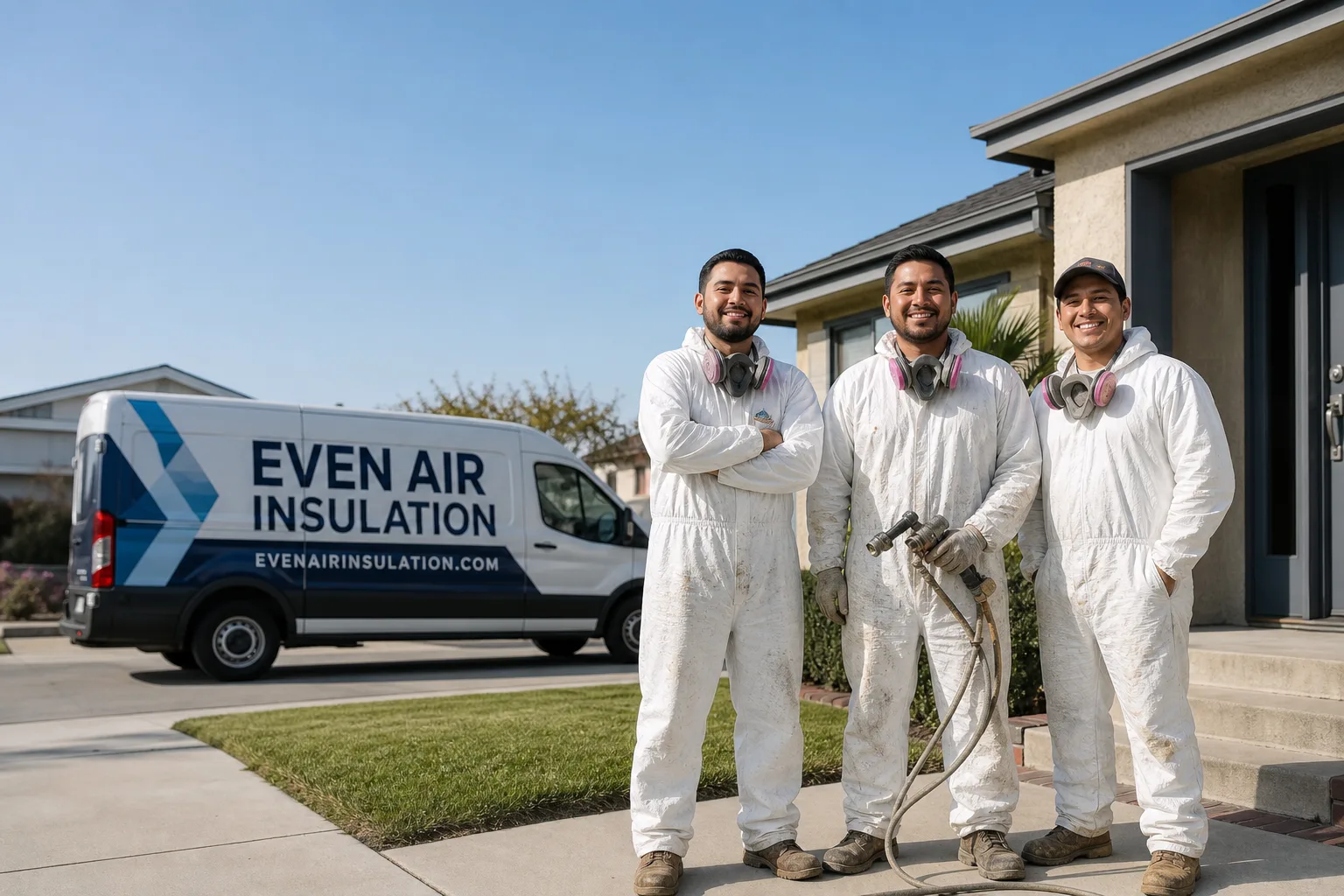
We’re a multi-method insulation specialist. That means we don’t show up with one product on the truck and try to make it fit every attic. We carry eight manufacturer lines, including Owens Corning, Icynene, Demilec, and GreenFiber, so the recommendation matches the house, not our inventory. Nelson Quirarte runs our crews, and he’s particular about air-sealing chemistry, dense-pack technique, and radiant barrier placement, because in North Hollywood the details decide whether the fix actually holds summer heat out.
Homeowners around the NoHo Arts District, Valley Glen, and the 91601 bungalow courts call us because we understand shallow attics, old wiring, and the difference between venting hot air and sealing it out. The response time to most North Hollywood jobs runs same-day or next-day for inspections. When a heat wave hits and a homeowner realizes their attic has zero insulation, waiting a week isn’t really an option. We get out there fast and tell you honestly what the attic needs.
Attic Insulation in North Hollywood: Why the Heat Hits Harder Here
North Hollywood sits deep in the San Fernando Valley, where summer ambient temperatures routinely land between 95°F and 105°F. Attic temperatures on those days climb far higher, often 40 to 60 degrees above outside air. In a 1940s bungalow with a low-pitch roof near the Arts District, the attic becomes an oven. The paper-faced fiberglass batts installed in the 1970s sag, tear, and collapse. The ceiling plane ends up effectively bare, and heat radiates down into every room below.
Most of North Hollywood was built before air conditioning and before California’s Title 24 energy codes required real insulation. That’s the local context most national content ignores. This isn’t a market of new builds getting insulated for the first time. It’s a market of legacy attics getting fixed properly, often for the first time in 50 years. Our Attic Insulation team approaches every job as a retrofit: air-seal first, then decide what goes on top.
Radiant Barrier in North Hollywood
Radiant Barrier in North Hollywood isn’t a luxury add-on. In this climate, it’s often the single highest-impact upgrade you can make to a shallow, broiling attic. A radiant barrier is a reflective material installed across the underside of the rafters. It works by reflecting radiant heat away from the attic floor instead of letting it soak into the insulation and the ceiling below.
We installed one on a 1940s bungalow off the NoHo Arts District with a low-pitch roof. The attic was shallow enough that our crew had to work on their knees. They found paper-faced batts collapsed from years of heat, plus an old vent fan that was pulling conditioned air out of the house instead of sealing anything. We air-sealed the ceiling plane first, then installed a radiant barrier across the rafters before blowing in Owens Corning fiberglass. The homeowner told us the back bedrooms stopped baking by mid-afternoon.
A typical radiant barrier installation for a North Hollywood attic runs $0.80 to $1.50 per square foot of attic floor area. For a 1,200-square-foot attic, that puts the job between $960 and $1,800, depending on attic height, access, and how much prep the rafters need. It works best combined with air-sealing, and in most Valley homes it pays for itself in a summer or two.
How Radiant Barrier Works in a Shallow Attic
Heat moves three ways: conduction, convection, and radiation. In a shallow North Hollywood attic, the dominant load is radiant heat from the sun beating on the roof deck. A radiant barrier intercepts that heat before it reaches the insulation below. Reflective surfaces don’t absorb heat the way fiberglass or cellulose do. They bounce it back toward the roof.
When Radiant Barrier Is the Right Call
We recommend a radiant barrier when the attic is low-pitch, hard to ventilate, and already running 130°F or hotter on a regular summer afternoon. That’s most attics between Vineland Avenue and the 170. If a homeowner plans to add insulation anyway, installing the radiant barrier at the same time saves on labor, because the crew is already in the space.
Attic Cleaning Services in North Hollywood
Attic Cleaning Services in North Hollywood mean more than hauling out old junk. In older homes across 91601 and 91602, the attic often hasn’t been touched in decades. We find rodent droppings, old knob-and-tube wiring, dust-caked vent fans, and insulation that’s broken down to the consistency of dry paper. You can’t install new insulation over that and expect it to perform.
In a 1950s Valley Glen tract home, we recently pulled out three contractor bags of collapsed batt material before the homeowner’s blown-in upgrade could go in. The old insulation had compressed to less than half its original R-value. Removing it exposed gaps around ceiling penetrations that had been leaking conditioned air for years. Once the attic is clean and sealed, whatever goes on top actually works.
Attic cleaning in North Hollywood typically runs $1.50 to $3.00 per square foot, depending on how much debris is up there and whether old insulation needs full removal. A 1,000-square-foot attic lands between $1,500 and $3,000. It’s not glamorous work, but in pre-Title 24 homes it’s often the prerequisite for everything else.
Rodent Damage and Insulation Replacement
Valley rats and squirrels love old attics. Once they nest, they contaminate insulation and chew wiring. We don’t do pest control, but we do remove and replace the insulation they’ve ruined. If there’s an active infestation, we’ll tell you to handle that first, then we’ll come in and restore the attic.
Air-Sealing Before New Insulation
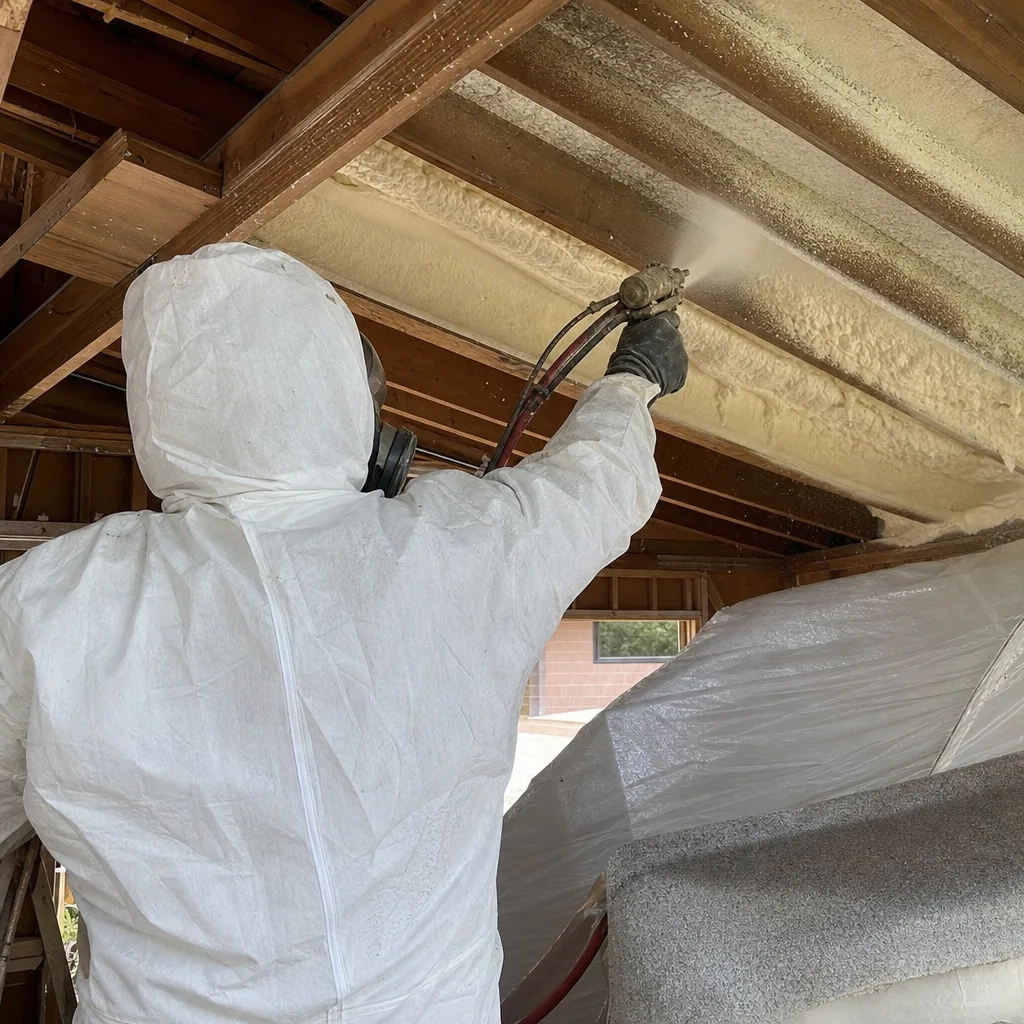
Attic cleaning gives us a clear view of where air is leaking: around recessed lights, plumbing stacks, and the top plates of interior walls. In a house with knob-and-tube wiring, we work carefully around the old circuits. Sealing those gaps before adding insulation is what turns a decent retrofit into a real one.
What happens when you call
- 1
A real person answersNo phone trees — you reach a local pro.
- 2
You get an upfront price rangeHonest numbers before anyone is dispatched.
- 3
A background-checked tech heads outLicensed & insured, dispatched right away.
- 4
You approve before work beginsNothing starts until you say go.
Trusted Brands We Service in North Hollywood
We install and service insulation from Owens Corning, Icynene, Demilec, and GreenFiber, among others. That matters because a 91601 bungalow with a shallow attic might need something different from a 91605 apartment building. Owens Corning fiberglass performs well in ventilated attics with decent headroom. Icynene and Demilec spray foams work where air-sealing is the priority and the roof geometry is tight. GreenFiber cellulose suits homeowners who want recycled-content material. We keep common materials stocked for fast turnaround across North Hollywood, which means we don’t have to special-order everything from a warehouse in the high desert.
Common Attic Insulation Problems We See in North Hollywood Homes
- Collapsed paper-faced batts. In the shallow attics of 1940s Arts District bungalows, decades of Valley heat cause the kraft paper backing to tear and the batts to slump. The insulation ends up doing almost nothing. The fix is removal, air-sealing, and a modern material that holds its shape.
- Legacy vent fans pulling the wrong direction. Many old North Hollywood homes have attic fans installed in the 1980s or 90s. When they run, they dump conditioned air out of the living space, which makes the AC work harder. We often disconnect them and reconfigure the venting before adding new insulation.
- Knob-and-tube wiring in 91601 and 91602. Older electrical systems limit what you can safely blow over. Cellulose and fiberglass can be installed around knob-and-tube, but it requires a careful, informed approach. We assess the wiring before any material goes down.
- Undersized attic ventilation toward 91605 and 91606. Mid-century tract homes and apartment buildings often have minimal eave and ridge venting. Adding insulation without fixing ventilation traps heat in the attic and shortens the life of the roof deck. We check ventilation as part of every job.
Pricing for Attic Insulation in North Hollywood, CA
Here’s what you can expect to pay in North Hollywood right now. Blown-in fiberglass or cellulose for a standard 1,200-square-foot attic runs $1,800 to $3,200. Attic batt insulation lands between $2,000 and $3,500 depending on R-value and attic access. A top-up over existing insulation that’s still in decent shape runs $1,200 to $2,200. Radiant barrier, as mentioned, runs $960 to $1,800 for that same attic. Full insulation replacement with removal and air-sealing runs $3,500 to $6,000 on older bungalows. These are honest ranges for this market, not national averages. The exact number depends on attic height, access, wiring condition, and how much prep the space needs. Estimates are free. Call (855) 362-0195 and we’ll send someone out.
We Also Serve Cities Near North Hollywood
Our crews work throughout the east San Fernando Valley. We handle attic insulation jobs in Studio City, Universal City, Burbank, and Valley Glen, along with the rest of North Hollywood. If you’re a few blocks over the city line, that’s fine. The housing stock and the heat load are basically the same, and we know the streets, the attics, and the building codes.
Serving North Hollywood, CA — Our Local Coverage Area
We’re based in the North Hollywood area and know this community well. Use the map below to see our service coverage — if you’re nearby, we can almost certainly help.
FAQs About Attic Insulation in North Hollywood
Because your attic is absorbing solar radiation through the roof deck and trapping it in a small, poorly ventilated space. A low-pitch roof with minimal eave venting collects heat faster than it can escape. By mid-afternoon the attic air is 40 to 60 degrees hotter than outside. The fix is a combination of air-sealing, radiant barrier, and ventilation. Call (855) 362-0195 for a free attic assessment.
Yes, with the right approach. Knob-and-tube wiring requires clearance around the conductors, so we don’t bury it under blown insulation the way we would Romex. We air-seal around penetrations, install proper junction-box covers where needed, and choose an insulation placement that respects the wiring layout. It’s slower work, but it’s done on bungalows all over 91601 and 91602. An inspection tells us what’s feasible without rewiring first.
In most North Hollywood attics, yes. More fiberglass slows heat transfer, but it doesn’t stop radiant heat from saturating the insulation in a broiling attic. A radiant barrier reflects heat before it ever reaches the fiberglass. The combination of both gives you the best performance for the money. For a 1,200-square-foot attic, adding a radiant barrier costs under $2,000 and makes the insulation below it dramatically more effective.
Usually not. Many legacy attic fans in North Hollywood homes are wired to pull air out of the attic, but they end up depressurizing the house and pulling conditioned air up from the living space. The fan runs, the AC runs harder, and nobody wins. We recommend sealing the attic floor, correcting the passive venting, and removing or disabling the fan. In most cases the fan was installed to compensate for an attic that was never properly sealed.
They need a similar one, but the details shift. Mid-century tract homes have more attic headroom and usually more eave venting than 1940s bungalows, which makes blown-in insulation more practical. But their ceilings still leak air around fixtures and top plates, and their original R-values are still far below what the Valley climate demands. The core strategy stays the same: seal the envelope, fix the ventilation, then add the right material for the space. We serve the entire 91605 and 91606 area with the same eight-brand roster.
Written by Nelson Quirarte, Owner at Even Air Insulation, serving North Hollywood and the San Fernando Valley.