Fast, Reliable Attic Insulation Across Studio City
Attic insulation in Studio City is less about keeping heat in and more about keeping relentless Valley heat out. Our crews work the flatlands off Ventura Boulevard and the hillside canyons above Fryman and Laurel, and we know how differently a 1948 ranch performs compared to a 2004 hillside rebuild. If your upstairs rooms push past 85°F by mid-afternoon and your AC never cycles off, the attic is usually the culprit. We respond to Studio City calls fast, and estimates are free. Call (855) 362-0195 and we’ll schedule a look at what’s actually happening above your ceiling.
Why Even Air Insulation Is Studio City’s Preferred Attic Insulation Company
We’re a multi-method insulation specialist, not a fiberglass-only contractor with a single product to push. That matters in Studio City because the right fix for a flat-roofed 1950s ranch on the Valley floor isn’t the same as the right fix for a hillside post-and-beam off Coldwater Canyon. We prescribe from eight manufacturer lines – Owens Corning, Johns Manville, Knauf, Rockwool, CertainTeed, Icynene, Demilec, and GreenFiber – so the material matches the application. That’s it. The right insulation for the job, not just the one we happen to stock.
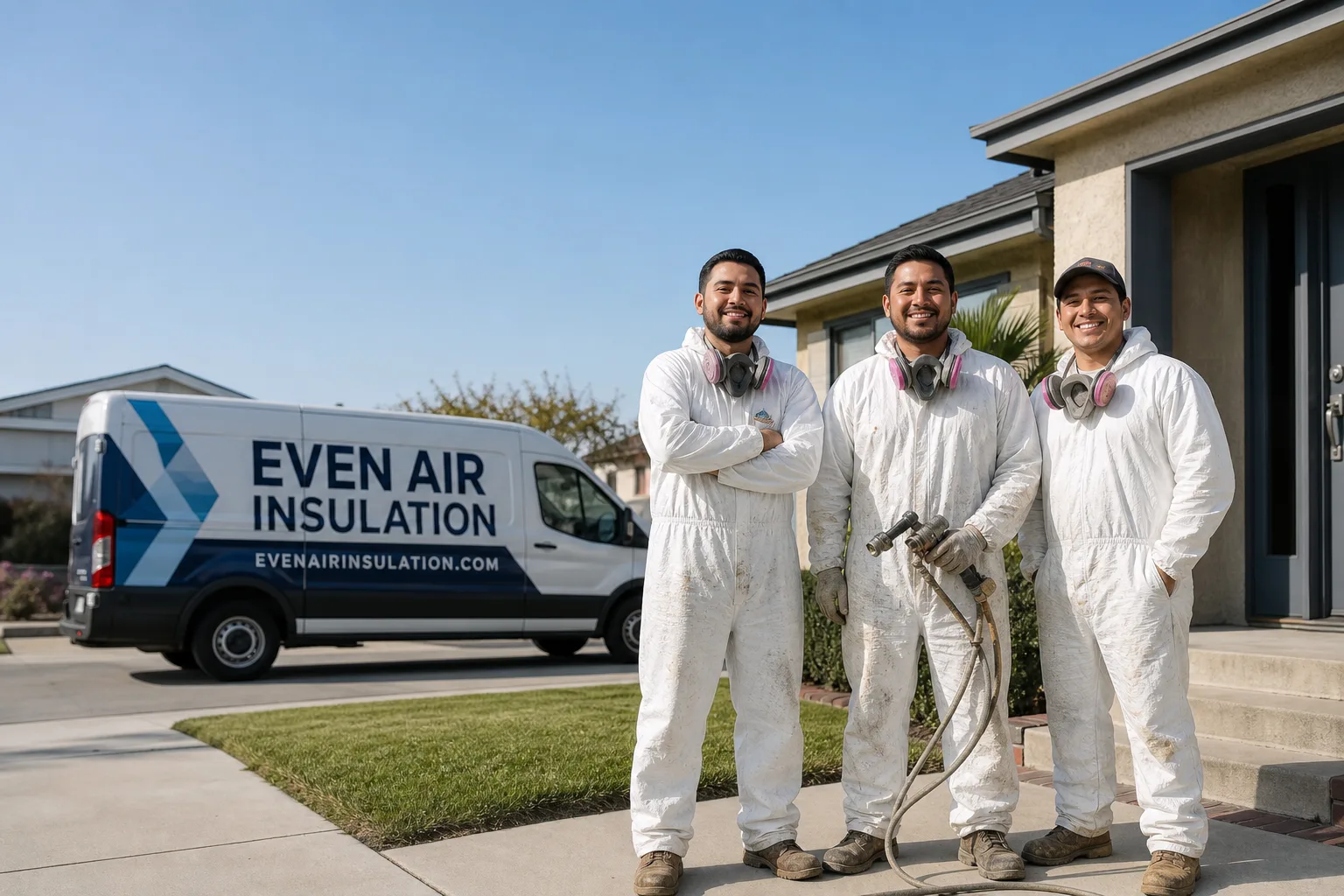
Nelson Quirarte runs our operation, and he’s built the crew around one principle: even temperatures, even energy bills, even air. Our Attic Insulation team handles everything from simple top-ups to full WUI-compliant retrofit work. Studio City homeowners call us because we explain what’s wrong in plain language, quote honestly, and show up when we say we will. Since we’re based in Koreatown, we can typically reach Studio City neighborhoods within a 45-60 minute window for scheduled estimates.
Attic Ventilation in Studio City
Attic Ventilation in Studio City is the difference between an attic that hits 140°F and one that stays under 115°F. Hillside attics on south-facing slopes off Laurel Canyon and Coldwater Canyon run 10-15 degrees hotter than Valley-floor attics before the sun even peaks. Proper ventilation – ridge vents, soffit vents, and balanced airflow – is what keeps that heat from pushing into your living space.
Most Studio City homes we inspect have either too little venting or vents that are blocked by old batts. A typical attic ventilation upgrade in Studio City runs $900-$2,400 depending on roof geometry and existing vent placement. Homes with complex rooflines or older rafter construction land on the higher end.
Balanced Intake and Exhaust
Ventilation only works when intake and exhaust are matched. We calculate the net free vent area against your attic square footage, then correct whichever side is short. A south-facing attic with good exhaust but poor intake still cooks.
Attic Baffles and Airflow Channels
If insulation compresses into your soffit vents, airflow chokes. We install baffles that hold insulation back and keep the channel open. This is standard practice on our Studio City retrofits, especially where original construction never included them.
Radiant Barrier in Studio City
Radiant Barrier in Studio City is the upgrade that makes the biggest difference on those hot canyon slopes. Radiant heat from the roof deck is what drives attic temperatures up – a radiant barrier reflects that heat before it ever reaches your insulation. For hillside homes that bake on south- and west-facing exposures, this is often more effective than adding more batts.
The misconception we run into constantly: homeowners add R-38 fiberglass to a south-facing attic and still see upstairs rooms at 84°F. Radiant heat isn’t stopped by fiberglass. That’s the piece the barrier solves. A Studio City radiant barrier installation typically falls between $1,200-$3,800, driven by attic accessibility and roofline complexity. Homes with limited clearance and irregular rafter bays take longer and cost more.
Radiant Barrier Placement
We install barrier under the roof deck in most retrofits, stapled to the rafters. This keeps the roof-deck heat from radiating into the attic air. For vaulted ceilings and tight post-and-beam attics, placement changes but the physics stay the same.
WUI-Compliant Assemblies
Studio City hillside homes sit in a wildfire interface zone, and ember-resistant assemblies matter. We pair radiant barriers with fire-rated materials so the thermal fix doesn’t create a code problem. If your home falls under WUI requirements, this is non-negotiable.
Trusted Brands We Service in Studio City
Studio City customers get access to materials most insulation contractors don’t carry. We stock Icynene and Demilec for open-cell and closed-cell spray foam applications – valuable when air sealing matters as much as R-value. CertainTeed fiberglass covers traditional batt and blown-in work. If fire resistance and sound dampening matter, we carry Rockwool mineral wool, which isn’t available through fiberglass-only shops. We keep these materials on hand for Studio City jobs, so we don’t have to delay installation waiting on a supplier run.
Common Attic Insulation Problems We See in Studio City Homes
- South-facing attic overheating despite thick batts. Homeowners in the hills add R-38 without a radiant barrier, and the attic still hits 135°F. Radiant heat isn’t reflected, so the insulation just absorbs it and radiates heat downward for hours after sunset.
- Compressed insulation in older ranch attics. Limited clearance and irregular rafter bays off Coldwater Canyon and in the flats mean installers compress batts to fit. Compression cuts R-value by 20-30% and leaves hot spots that push upstairs rooms past 85°F.
- Failed WUI inspection rework. Hillside homes using standard fiberglass without ember-resistant detailing fail fire-code review. The fix requires removal and reinstallation with fire-rated materials – twice the cost of doing it right the first time.
- Vaulted ceilings and exposed beams with zero thermal break. Post-and-beam construction from the 1950s and 60s looks beautiful but leaks heat. Without proper insulation at the roofline, these homes run 10 degrees hotter upstairs than the thermostat says.
Pricing for Attic Insulation in Studio City, CA
A basic attic top-up in Studio City – adding blown-in fiberglass or cellulose to existing coverage – runs $1,400-$2,800 for a typical 1,200-1,600 square foot attic. Full replacement, including removal of old material, air sealing, and new insulation, typically lands between $3,500-$7,500. Adding a radiant barrier on its own is $1,200-$3,800. Hillside access, limited clearance, and WUI requirements all push toward the higher end. Every quote is itemized so you see exactly what you’re paying for. Call (855) 362-0195 for a free estimate – we’ll walk the attic with you and point out what actually needs doing.
We Also Serve Cities Near Studio City
Our crews work Studio City regularly, along with North Hollywood, Universal City, Sherman Oaks, and West Hollywood. If you’re just over the hill in the Valley or south of the 101, we cover you. Same crew, same material lineup, same honest approach.
Serving Studio City, CA — Our Local Coverage Area
We’re based in the Studio City area and know this community well. Use the map below to see our service coverage — if you’re nearby, we can almost certainly help.
FAQs About Attic Insulation in Studio City
Your canyon-edge exposure is doing the damage. South-facing slopes off Laurel Canyon and Coldwater Canyon receive full afternoon sun with no shade buffer, and the hillside terrain traps heat in the canyon. We’ve measured attics 10-15 degrees hotter than comparable Valley-floor homes on the same day. A radiant barrier plus balanced ventilation fixes it. Call (855) 362-0195 and we’ll show you the temperature difference before and after.
If your home sits in the wildfire interface zone – and most hillside homes in 91604 do – yes. WUI requirements mandate ember-resistant assemblies, and using non-fire-rated materials means failed inspections and expensive rework. We pair reflective barriers with Rockwool mineral wool where fire resistance is required. It costs a little more up front and saves you a full removal later.
Yes. We upgraded a 1950s post-and-beam ranch off Laurel Canyon with a vaulted ceiling, limited attic clearance, and original settled fiberglass. After installing an Owens Corning radiant barrier and Rockwool fire-rated batts, we rebalanced the attic ventilation to handle the south-facing solar gain, and the homeowner reported upstairs rooms dropping below 80°F within a week – without adding a second HVAC unit. Tight attics take more time, but the work gets done properly.
Combine a radiant barrier with proper ventilation. The barrier reflects the radiant heat that causes the problem; the ventilation exhausts whatever heat still builds up. Adding batts alone won’t work – we’ve seen too many south-facing attics still cooking at 135°F after a fresh R-38 install because nobody addressed the radiant component. Call (855) 362-0195 for an assessment, and we’ll tell you exactly what your attic needs.
Yes. We carry full material stock – radiant barrier, fire-rated batts, vent components, and open-cell spray foam – so we don’t leave a hillside property half-done because something got left at the shop. Detached workshops with their own attic space get inspected and quoted at the same visit. One trip, done right.
Call Even Air Insulation at (855) 362-0195 for your free Studio City attic assessment. No obligation – just straight answers about what’s happening up there.
Written by Nelson Quirarte, Owner at Even Air Insulation, serving Studio City and the San Fernando Valley.