
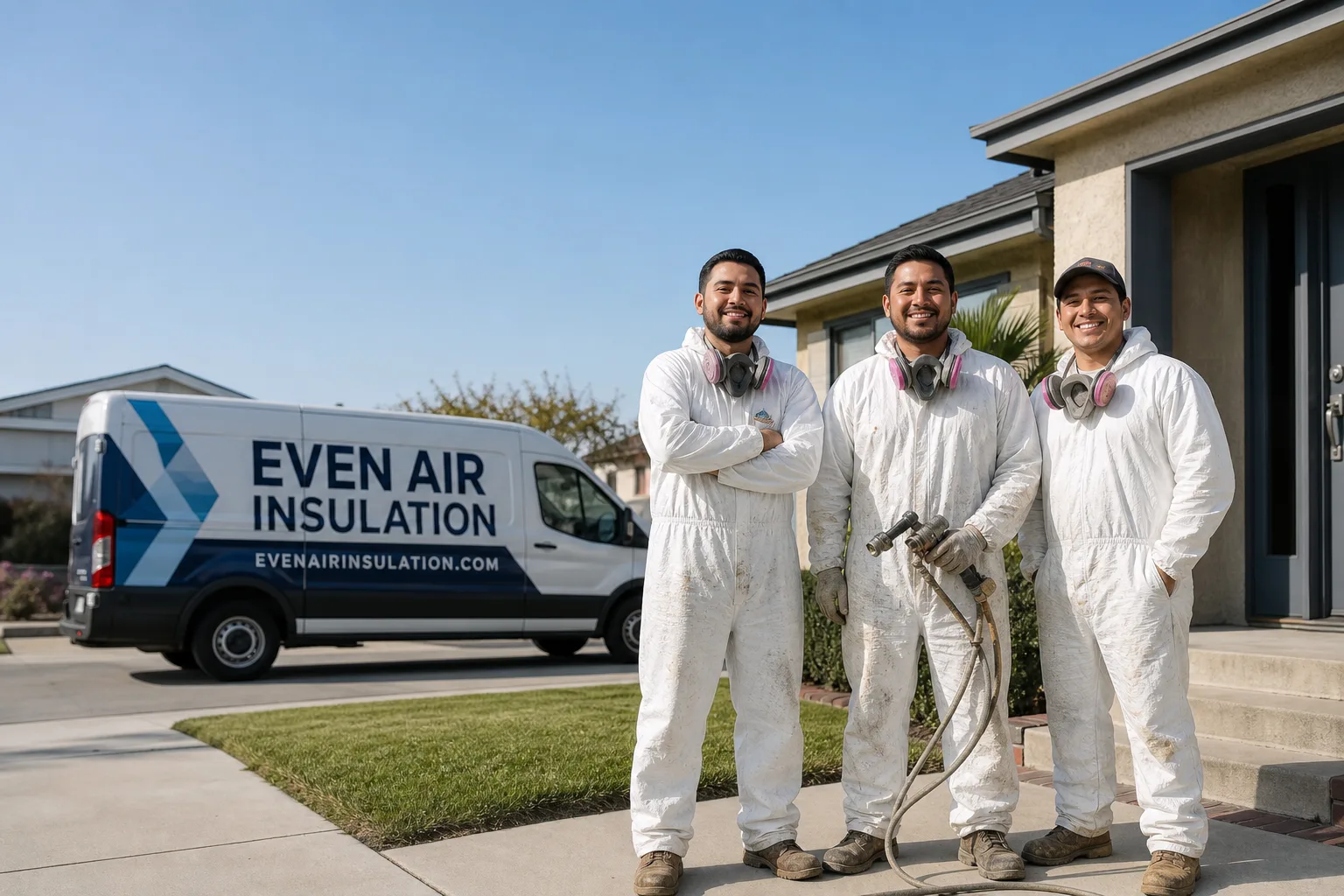
Fast, Reliable Attic Insulation Across Tujunga
Attic insulation in Tujunga typically runs $1,800 to $4,600 depending on attic size, access difficulty, and whether we’re topping up existing material or starting from scratch. Most jobs take one day. Tujunga’s older homes, the mid-century ranches and cabin-style builds that line the canyon, almost always need air-sealing before insulation goes in, because the attics were framed without drywall ceilings or any real air barrier. If your upstairs bakes in August and your floors are cold by November, call us at (855) 362-0195. We know these houses, we know this microclimate, and we’ll give you a straight answer about what your attic actually needs.
Why Even Air Insulation Is Tujunga’s Preferred Attic Insulation Company
Tujunga isn’t Burbank, and it isn’t Sunland. The homes here sit against the San Gabriels in a canyon corridor where summer sun hits south and west slopes hard, and winter nights drop colder than anything on the valley floor. We’ve worked on houses along Mount Gleason Avenue, in the 91042 zip, and over in the 91043 streets near the washes, and the pattern is consistent: attics that were never meant to hold insulation, wiring that was never meant to be covered, and air leaks that undo whatever insulation is up there. Nelson Quirarte, who leads our team, trained on exactly these retrofits. We don’t send a crew that’s only ever seen tract homes with drywalled ceilings. We send people who understand what a 1948 rafters-open attic looks like and what it needs before a single batt goes down.
Our response time to Tujunga is same-week for most estimates, and we stock the materials these jobs require. That matters because older Tujunga attics often need intumescent caulk, ember-resistant vent covers, and blown-in product on short notice. We carry it. When you call (855) 362-0195, you’re talking to someone who knows the difference between a Sunland hillside and a Tujunga canyon mouth.
Radiant Barrier in Tujunga
Radiant barrier in Tujunga is one of the highest-return upgrades for homes with south or west-facing roof slopes that catch full sun from noon until sunset. A radiant barrier is a reflective material installed under the roof deck that bounces radiant heat back out instead of letting it radiate down into the attic, and thereby into your living space. In Tujunga’s foothill geography, where the canyon walls concentrate solar gain and there’s no marine layer drifting in from the coast, a properly installed radiant barrier can drop attic temperatures by 20 to 30 degrees on a 95-degree afternoon. For a typical 1,200 to 1,800 square-foot Tujunga home, expect to pay $1,400 to $2,800 depending on roof pitch and access.
When the Slope Works Against You
Homes built into the south-facing slopes off Mount Gleason and along the canyon mouths absorb heat that never touches valley-floor houses. The roof deck itself heats to 140-plus degrees, and that stored radiation keeps pumping into the attic for hours after the sun sets. If your air conditioner runs at dusk even when outdoor air has cooled, you’re fighting radiant heat, not just hot air.
Pairing Radiant Barrier with Insulation
A radiant barrier is not a substitute for insulation. It handles radiant heat, but you still need a thermal layer to slow conductive and convective heat transfer. On Tujunga homes we typically install the barrier under the roof deck, then ensure insulation at the attic floor is at proper R-value and fully air-sealed. When both layers work together, the cooling load drops measurably, which matters when late-summer electric bills in this corridor run well above the LA average.
Attic Cleaning Services in Tujunga
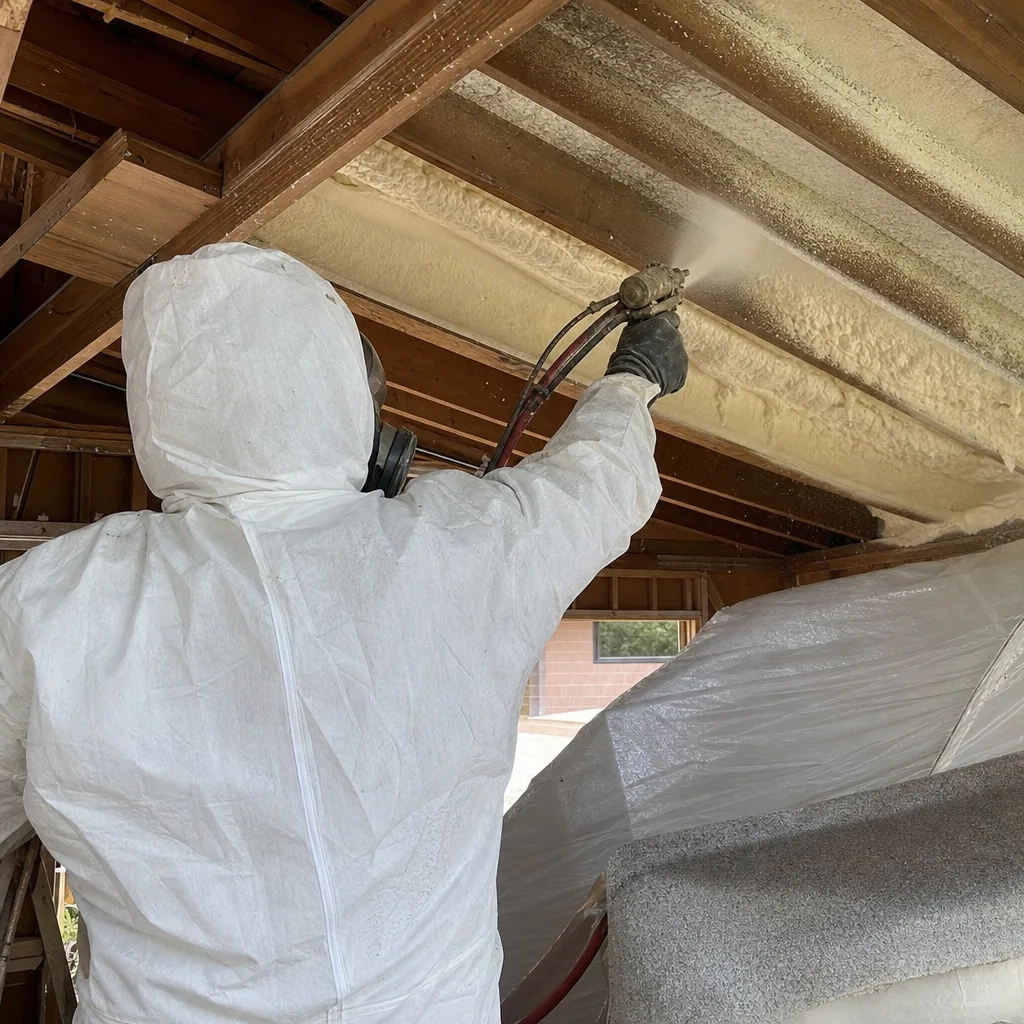
Attic cleaning services in Tujunga usually involve removing old, compressed, or pest-damaged insulation, clearing out dust and rodent droppings, sanitizing the space, and prepping the attic for new insulation or air-sealing work. In Tujunga specifically, cleaning often means working around open rafters, exposed wiring, and decades of accumulated dust blown in through canyon winds. A standard attic cleaning for a Tujunga home runs $800 to $1,900, with the higher end applying to attics with pest contamination, knob-and-tube complications, or very tight access through hallway hatches.
Cleaning Before Insulation, Not After
You don’t want new insulation packed over old rodent nests or dust-saturated batts. In Tujunga’s older homes, we frequently find the original 1950s fiberglass compressed to half its original thickness, loaded with fine silt that Santa Ana winds pushed through the soffit vents. That material has to come out before anything new goes in. We remove it, bag it, and leave the attic clean enough to inspect.
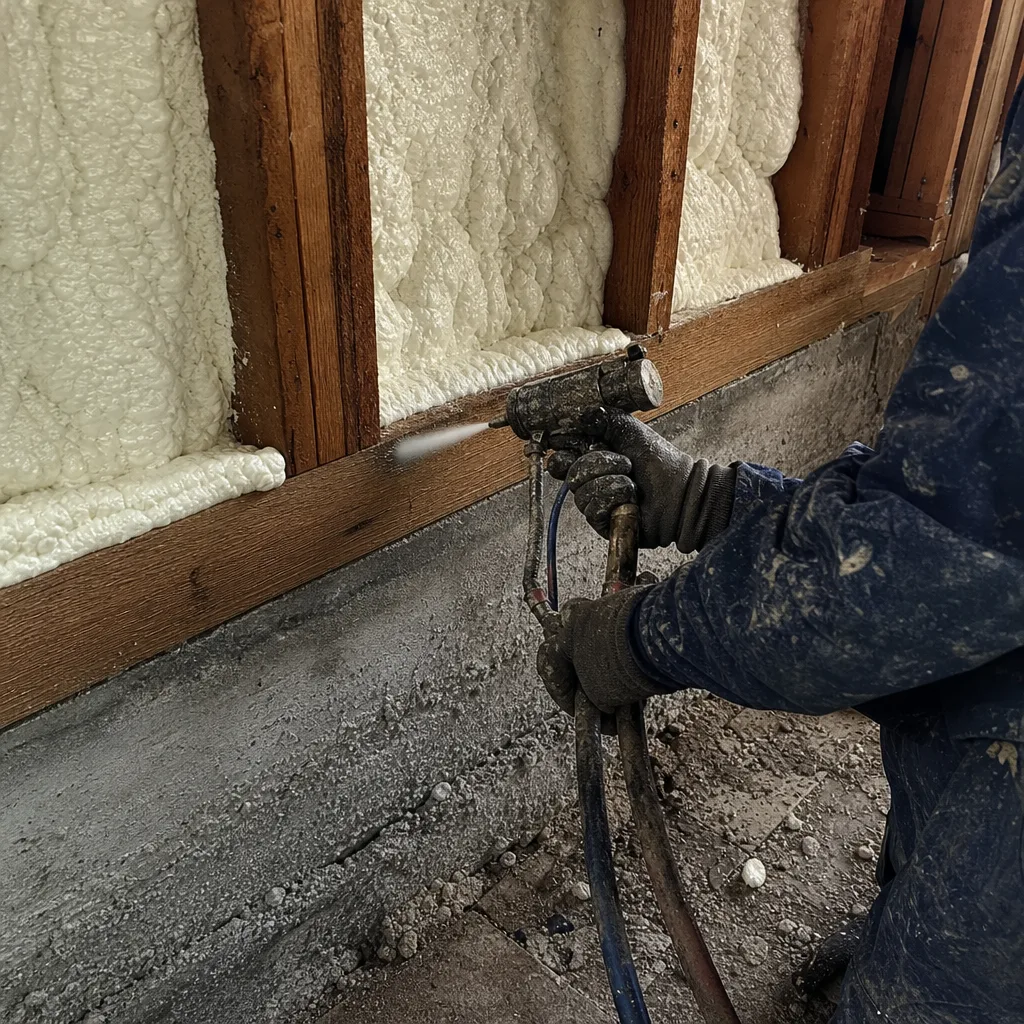
Exposed Rafters and Open Framing
Attic cleaning on a Tujunga ranch with no ceiling drywall means there’s no flat surface below the insulation. The joist bays are open to the living space at some points, and the underside of the roof sheathing is right there. Cleaning in that context is also a chance to map what’s up there: where the knob-and-tube runs, where the gaps are, where the old newspapers used as “insulation” in the 1930s have settled into a fire load. You find things in Tujunga attics you don’t find in Sylmar tract homes. Our crews know what they’re looking at.
What happens when you call
- 1
A real person answersNo phone trees — you reach a local pro.
- 2
You get an upfront price rangeHonest numbers before anyone is dispatched.
- 3
A background-checked tech heads outLicensed & insured, dispatched right away.
- 4
You approve before work beginsNothing starts until you say go.
Trusted Brands We Service in Tujunga
We’re a multi-method insulation contractor, which means we match the product to the house rather than pushing whatever’s on the truck. In Tujunga, that often means Attic Insulation with Owens Corning batts for easy-access flat attics, Johns Manville for a similar performance at a different price point, and GreenFiber blown-in cellulose for the open-rafter, knob-and-tube-era homes where we need a product that can be kept clear of old wiring while filling every odd-shaped cavity. We also carry Demilec spray foam for the rare Tujunga attic where closed-cell makes sense to solve moisture or structural issues. The right insulation for the job, not just the one we happen to stock.
Common Attic Insulation Problems We See in Tujunga Homes
- Compressed, dust-loaded batts in open-rafter attics. Canyon winds push silt through old soffit vents for decades, and by the time we see it, the fiberglass has collapsed to a fraction of its rated R-value. The thermal layer is essentially gone, even though the attic “looks insulated.”
- Knob-and-tube wiring buried under added insulation. Homes built between the 1920s and early 1950s often still have active K&T runs in the attic. Old insulation added in the 1970s or 1980s sits directly on top of those runs, which were never rated to be covered. We see scorched batts, not tripped breakers, and that’s the warning sign.
- Cold floors from unlined, vented crawlspaces. Attic insulation alone won’t fix cold floors if the crawlspace at the canyon mouth is open to night air. Homes along the washes often have floor systems that leak heat downward and draw cold air up through wall cavities. The attic is only part of the envelope.
- Santa Ana ember intrusion through unsealed soffit vents. After the 2007 and 2020 fire seasons, a lot of Tujunga owners started asking about ember resistance. Unsealed, open soffit vents are a direct path for wind-driven embers into an attic full of dry, old insulation.
Pricing for Attic Insulation in Tujunga, CA
Attic insulation in Tujunga runs $1,800 to $4,600 for a full job on a typical 1,000 to 1,800 square-foot home. An attic insulation top-up, where existing material is still in decent shape and you just need another 6 to 8 inches of blown-in, lands between $900 and $1,700. A full removal, cleaning, air-sealing, and new insulation on a mid-century ranch with no ceiling drywall typically falls between $3,000 and $4,600. Radiant barrier adds $1,400 to $2,800 depending on slope and access. What changes the price most in Tujunga is access: tight hallway hatches, low-slope roofs you can’t stand in, and knob-and-tube runs that require careful material placement all add labor time. Call (855) 362-0195 for a free estimate. We’ll walk your attic and give you a number before we leave.
We Also Serve Cities Near Tujunga
While this page focuses on Attic Insulation in Tujunga, our crews regularly work in Sunland, La Crescenta-Montrose, Shadow Hills, and Burbank. The housing stock and microclimates shift block by block up here, and our approach does too. If you’re in a neighboring community and want someone who knows the foothill corridor, call (855) 362-0195.
Serving Tujunga, CA — Our Local Coverage Area
We’re based in the Tujunga area and know this community well. Use the map below to see our service coverage — if you’re nearby, we can almost certainly help.
FAQs About Attic Insulation in Tujunga
No safe contractor will insulate directly over live knob-and-tube wiring, and neither will we. The old wiring was never rated to be covered, and burying it creates a fire hazard. We can still insulate your attic: we map the K&T runs, keep the insulation clear of those lines by a safe margin, air-seal the penetrations with intumescent caulk, and blow in GreenFiber to consistent depth everywhere else. If the wiring is still active, we recommend having an electrician assess it. We’ll coordinate that before we insulate. Call (855) 362-0195 to schedule an attic inspection and we’ll tell you exactly what you’re dealing with.
Yes, and it’s one of the cases where we actively recommend it. Homes built into the south and west-facing slopes above Mount Gleason and along the canyon mouths absorb solar radiation that valley-floor homes never experience. A radiant barrier installed under the roof deck reflects most of that radiation back out, dropping attic temperatures by 20 to 30 degrees on a hot afternoon. It typically costs $1,400 to $2,800 here, and the payback on a south-facing Tujunga home is generally faster because you’re fighting more heat gain than a house in Burbank or Sunland. Call (855) 362-0195 for a roof-to-attic assessment and we’ll tell you whether radiant barrier or insulation should come first.
Because your crawlspace is probably unlined and vented, and cold canyon air is moving through it. In Tujunga, especially near the washes and canyon mouths, homes often have pier-and-post foundations with open crawlspaces that funnel cold night air up through unsealed floor penetrations. Your attic insulation is doing its job up top, but the thermal envelope is leaking at the bottom. The fix is air-sealing and insulating the crawlspace or floor system, which is work we can assess and advise on. Attic insulation alone won’t solve cold floors in these homes. Call (855) 362-0195 and we’ll walk the whole envelope with you.
It involves working in an attic where the rafters and joists are open to the living space below, so every step matters. We remove the old insulation, whether it’s collapsed fiberglass batts, old newspaper, or dust-saturated blown-in from a previous era. We bag and haul it out, sanitize the space, and map what’s up there: wiring runs, vent locations, and any gaps in the top plates. On a Tujunga ranch with no drywall, cleaning is also the moment we identify where air is leaking from the home into the attic, because those gaps become visible when the insulation is gone. Expect to pay $800 to $1,900 depending on size and condition. Call (855) 362-0195 for a specific quote.
Yes, and it’s a service we’ve been doing more of in Tujunga as owners think harder about ember defense. Open soffit vents are a direct entry point for wind-driven embers during Santa Ana conditions, and an attic full of old, dry insulation is fuel. We install ember-resistant vent covers and seal gaps around soffit and eave penetrations as part of our attic work. If you’re in the 91042 or 91043 zip and want to know how your vents would hold up in a wind-driven ember event, call (855) 362-0195 and we’ll take a look.
Written by Nelson Quirarte, Owner at Even Air Insulation, serving Tujunga and the foothill corridor.