Attic Insulation in San Fernando: Costs, Venting Fixes, and What Actually Works Here
Attic insulation in San Fernando, CA typically runs $1,800 – $4,500 for a full replacement in a standard single-story home, with top-ups starting around $900 and radiant barrier adding $1,200 – $2,800 depending on roof configuration. Most projects are completed in one day. The bigger issue in this city isn’t always the insulation itself: it’s that many older San Fernando attics are unvented dead-air spaces baking past 150°F, which means the fix often requires venting work and a radiant barrier alongside new insulation to actually solve the problem.
Call (855) 362-0195 for a free estimate from Even Air Insulation, led by Nelson Quirarte. We serve all of San Fernando’s 91340 and 91341 zip codes, and we’ll be straight with you about what your attic needs and what it doesn’t.
Fast, Reliable Attic Insulation Across San Fernando
If you live in San Fernando, you already know the heat hits differently here than it does ten minutes east in Burbank. That’s not in your head. The Valley floor around San Fernando runs 5 – 10°F hotter on summer afternoons, and the homes here, mostly single-story, pre-1980 stucco tract and post-war builds, weren’t designed for that kind of sustained radiant load. We work in San Fernando regularly, including the neighborhoods around San Fernando High School, the downtown core near Maclay Avenue, and up toward Lopez Adobe. We know the housing stock, we know which attics are unvented, and we know what actually fixes them.
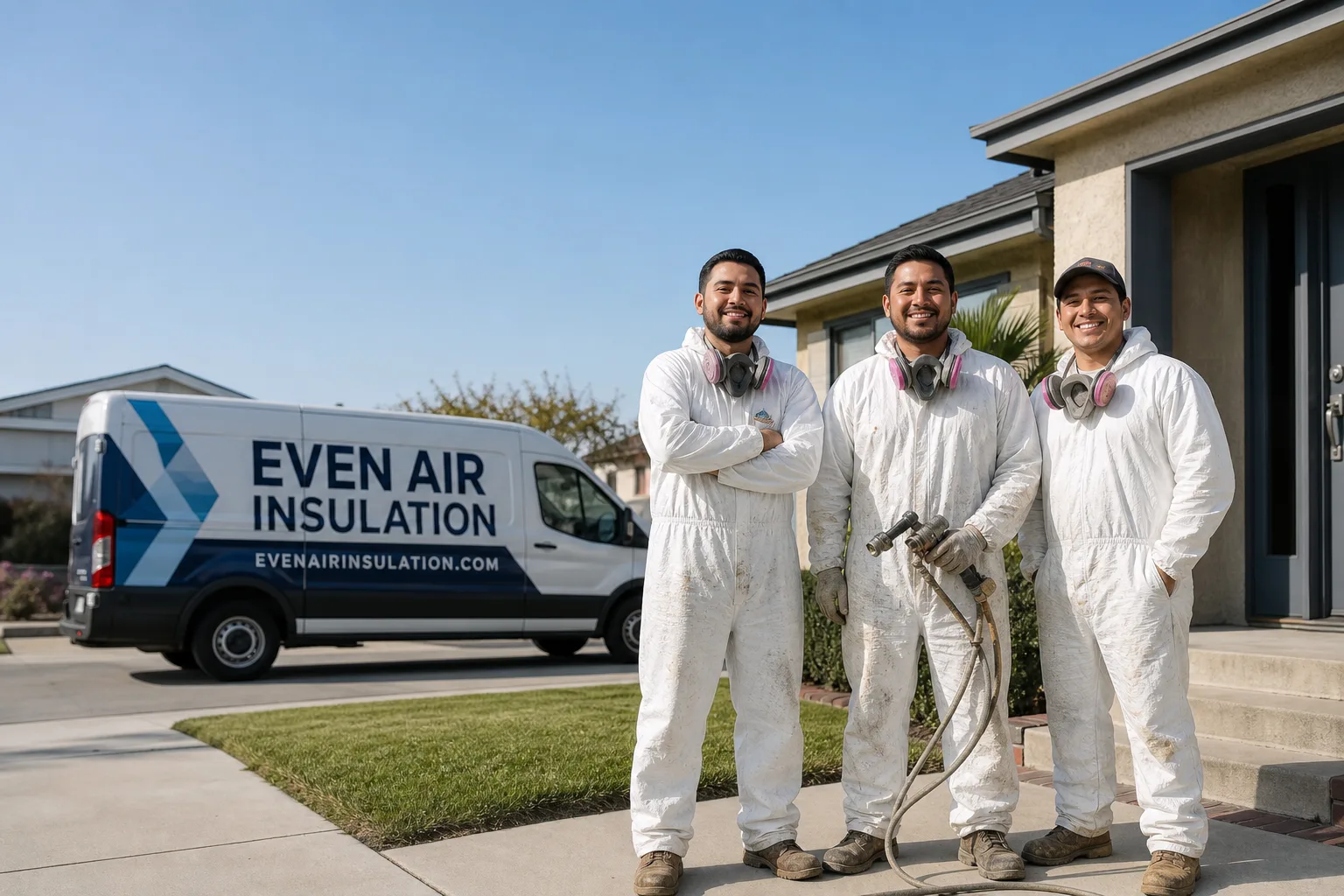
When you call us, you’re talking to a local crew that’s already worked on homes just like yours around here. Nelson Quirarte built Even Air Insulation around the idea that the right material for the job depends on the attic, not on what’s easiest to install. Call (855) 362-0195 and we’ll schedule a walkthrough, usually within a day or two for San Fernando residents.
Why Even Air Insulation Is San Fernando’s Preferred Attic Insulation Company
We’re not the contractor that shows up with one product and tells you it’s perfect for every attic. Even Air Insulation carries materials from eight manufacturers, including Owens Corning, Johns Manville, Demilec, and GreenFiber, because no single insulation type works for every San Fernando roof configuration. A flat-roof 1950s home near the Pacoima Wash edge needs something different from a newer infill townhome off Truman Street. We match the application to the method, not the other way around.
San Fernando homeowners call us for three things most often: their attic is scorching by mid-morning, their cooling bills have crept up every summer, or they’ve been told they need more R-value and want a second opinion on whether that’s true. Often it isn’t. On the older dead-air attics around the downtown core, adding blown-in cellulose to a 150°F unvented space just means you’ve insulated a heat trap. We’ll tell you that before we quote anything.
Our crews work in San Fernando weekly, which means we know where the older knob-and-tube-era framing shows up, which neighborhoods have tight alley access, and how to handle a flat or very low-slope roof where venting space is minimal. That local familiarity matters more than a generic “we sit in your city” claim ever could.
Attic Ventilation in San Fernando
Attic ventilation in San Fernando is the single most overlooked fix for homes that bake by 10 a.m. On many pre-1980 flat and low-slope roofs near the downtown core and along the Pacoima Wash edge, there is no functional intake/exhaust balance at all; the attic is a sealed dead-air space that radiates heat straight through the ceiling and into the ducts. Attic ventilation work for a San Fernando home typically runs $400 – $1,200 depending on whether we’re adding ridge or box vents, baffles, or a powered exhaust option, and it’s often the prerequisite for any insulation replacement to perform.
Why unvented attics fail first here
San Fernando’s inland Valley-floor microclimate means 100°F+ afternoons are routine from June through September, with intense direct sun and big day-night swings. When an attic has no way to exhaust that heat, it compounds: 150°F attic air warms the ceiling drywall, radiates into living spaces by mid-morning, and cooks any ductwork running through the space. Ventilation is about giving that heat somewhere to go.
When venting alone isn’t enough
On homes with flat roofs and almost no attic cavity, passive venting can’t move enough air. That’s where a radiant barrier becomes the load-bearing solution, because it stops heat from entering the attic assembly in the first place. We evaluate both factors before recommending a plan, because adding vents to an attic that can’t breathe is wasted money.
Radiant Barrier in San Fernando
Radiant barrier in San Fernando is, for many homes, the highest-impact upgrade we install. A foil radiant barrier stapled to the underside of the rafters reflects radiant heat before it ever reaches the insulation, which matters enormously in a city that runs 5 – 10°F hotter than Burbank or Glendale. Radiant barrier installation for a typical San Fernando single-story home runs $1,200 – $2,800 depending on roof geometry and attic access, and it’s the part of the job that actually addresses why your house is hot by 10 a.m. while a similar home two blocks away in Burbank is still comfortable.
Radiant heat is the problem here
On San Fernando’s older flat-roof homes, the roof deck absorbs direct sun all morning and radiates that heat downward into the attic cavity. Blown-in insulation slows conduction but does little to stop radiant transfer. The foil barrier is the only material that directly reflects that energy, and on unvented dead-air attics near the downtown core, it’s often the difference between a livable second-floor hallway and one that’s 90°F by late morning.
Pairing barrier with venting
A radiant barrier works best when there’s at least some airflow to carry reflected heat out of the attic. That’s why we almost always quote barrier and venting together on the older San Fernando homes, rather than selling one without the other. On tight low-slope roofs, we install the barrier under Owens Corning or Johns Manville insulation and rebalance whatever existing intake and exhaust exists.
Trusted Brands We Service in San Fernando
Even Air Insulation carries and installs materials from eight manufacturers so we can match the product to the attic, not to what’s on our truck. For San Fernando’s hot low-slope and flat-roof homes, we lean on Owens Corning and Johns Manville batt when traditional insulation makes sense, Demilec spray foam when air-sealing and structural adhesion matter, and GreenFiber blown-in cellulose for top-ups and retrofit work where access is tight. If your home needs Rockwool mineral wool for fire-rated or sound-dampening assemblies, we have that too. We keep common material stock accessible for San Fernando service calls, which means faster turnaround when you’re ready to schedule.
Common Attic Insulation Problems We See in San Fernando Homes
- Unvented flat-roof attics baking past 150°F. Homes near the downtown core and Pacoima Wash edge often have flat or very low-slope roofs with no functional venting. The attic becomes a dead-air oven that radiates heat into living space all day.
- Disintegrated 1970s batt reading as “insulated” on paper. Original minimal batt from the 1940s through 1970s compresses, settles, and breaks down over decades. Many San Fernando homes look insulated in inspection reports but perform like they have almost nothing up there.
- Ductwork cooking in the attic. When attic air hits 150°F, any ducts running through that space are delivering pre-heated air to your registers. Insulating the attic floor helps, but venting and barrier work is what actually protects the ducts.
- Tight pre-1980 attics with knob-and-tube-era framing. Many of the older single-story homes in the 91340 and 91341 zip codes have shallow rafter bays and exposed older wiring. That limits how much insulation can be safely added without addressing clearance and venting first.
Pricing for Attic Insulation in San Fernando, CA
Here’s what you can expect to pay for attic work in San Fernando, based on typical projects we’ve done across the 91340 and 91341 zip codes:
| Service | Typical Range in San Fernando |
|---|---|
| Attic Insulation Top-Up (blown-in cellulose over existing) | $900 – $1,600 |
| Full Attic Insulation Replacement (batts or blown-in) | $1,800 – $4,500 |
| Attic Ventilation (baffles, box/ridge vents, balance work) | $400 – $1,200 |
| Radiant Barrier (foil under rafters) | $1,200 – $2,800 |
| Combined Venting + Barrier + Insulation (common on flat-roof homes) | $3,500 – $7,500 |
Flat-roof homes with no existing ventilation typically land on the higher end of these ranges because the job includes creating airflow where none exists. A standard pitched-roof home with an accessible attic is usually at the lower end. Every estimate from Even Air Insulation is free, and we’ll walk you through exactly what your attic needs and why. Call (855) 362-0195 to set one up.
We Also Serve Cities Near San Fernando
While this page focuses on Attic Insulation in San Fernando, our crews regularly work in North Hills, Shadow Hills, Northridge, and Van Nuys. If you’re just over the city line and dealing with the same Valley heat and older housing stock, give us a call and we’ll get you on the schedule. We treat every job as local work, whether it’s a flat-roof near the downtown core or a stucco tract home off Maclay.
Serving San Fernando, CA — Our Local Coverage Area
We’re based in the San Fernando area and know this community well. Use the map below to see our service coverage — if you’re nearby, we can almost certainly help.
FAQs About Attic Insulation in San Fernando
San Fernando runs 5 – 10°F hotter than Burbank on summer afternoons, and many older flat-roof homes near the downtown core have fully unvented attics that trap radiant heat. The result is a dead-air space baking past 150°F that radiates through your ceiling by mid-morning. The fix is usually radiant barrier plus venting balance, not just more insulation. Call (855) 362-0195 for a free attic assessment.
On San Fernando’s low-slope and flat-roof homes, radiant barrier is often more important than added R-value, because the problem is radiant heat transfer through an unvented attic, not conductive heat through the insulation. If your attic has minimal or no venting, more insulation alone won’t solve the 10 a.m. heat problem. We’ll evaluate your specific roof configuration and tell you which is actually needed.
Yes. While flat and very low-slope roofs have limited space for passive venting, we can usually add baffles, box vents, or a powered exhaust option to create airflow where none exists. On truly tight assemblies, we pair a radiant barrier with any venting we can create so the heat is reflected before it becomes trapped. This is common work for us on the older homes around the Pacoima Wash edge.
We use Owens Corning and Johns Manville batt insulation, GreenFiber blown-in cellulose, and Demilec spray foam depending on the attic configuration and what the home needs. For radiant barrier work, we install foil barrier under the rafters in conjunction with the insulation product that fits the space. The material choice follows the attic, not the other way around.
Newer infill townhomes and ADU conversions in San Fernando typically have tighter attics and may require fire-rated or sound-dampening assemblies. That’s where a product like Rockwool mineral wool matters, because it offers fire resistance and sound control that standard fiberglass doesn’t. Even Air Insulation carries Rockwool specifically for these applications, so you don’t have to accept a one-material answer.
Ready to Fix Your San Fernando Attic?
If your home is hot by mid-morning, your cooling bills keep climbing, or you know the attic hasn’t been touched in decades, let’s take a look. Even Air Insulation offers free estimates, straightforward recommendation based on what your attic actually needs, and installation by crews who know San Fernando’s housing stock. Call (855) 362-0195 today and ask for Nelson Quirarte’s team.
Written by Nelson Quirarte, Owner at Even Air Insulation, serving San Fernando and the surrounding Valley communities.