
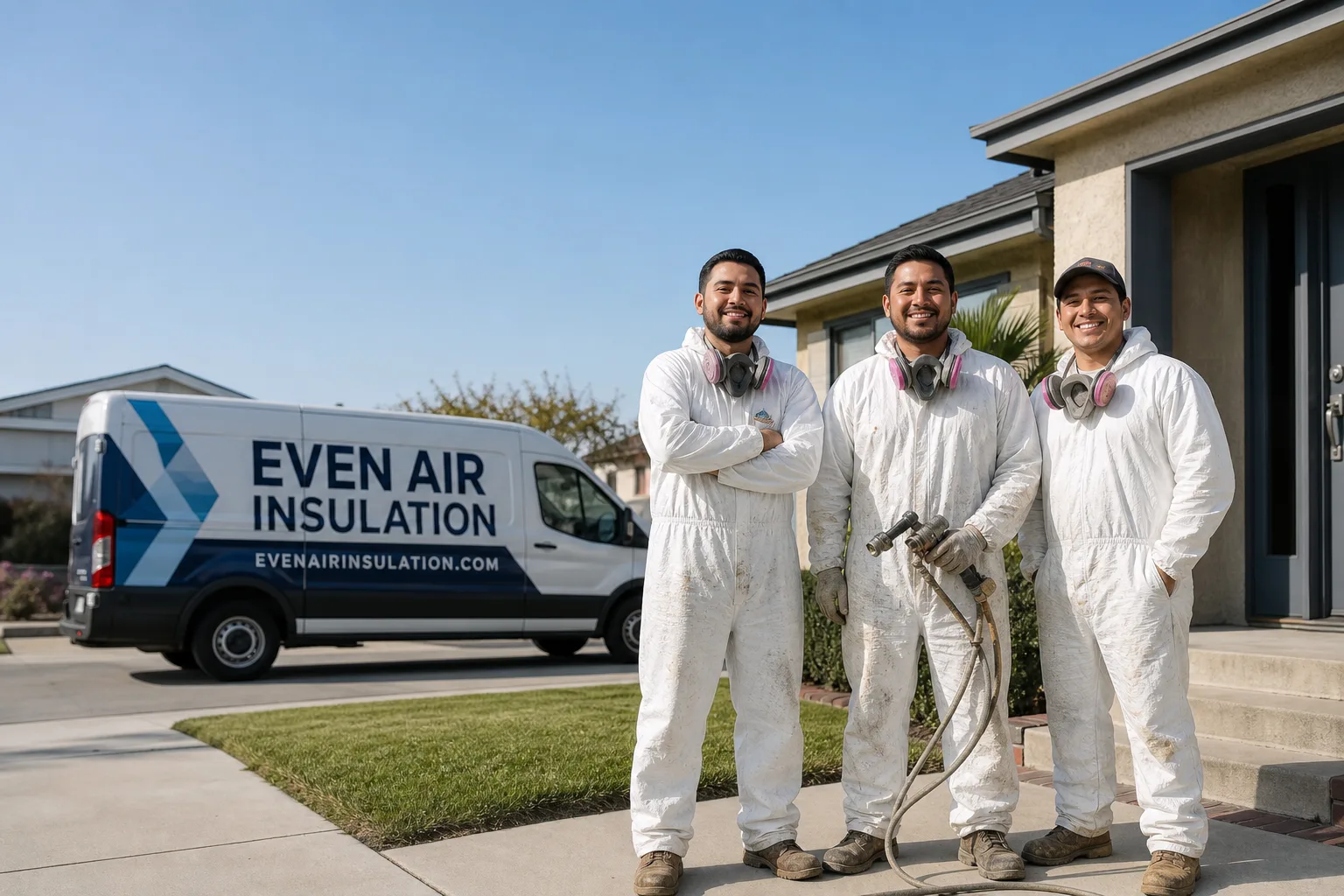
Fast, Reliable Attic Insulation Across Lomita
Attic insulation in Lomita typically runs $1,800 – $4,600 depending on whether we’re blowing cellulose into a shallow 1940s attic floor or pulling old, corroded material and starting fresh. Most 90717 jobs take one day, sometimes two when we’re treating rusted hardware and installing baffles before the insulation goes down. We know Lomita’s bungalows and stucco duplexes well – the narrow side yards, the open-eave vents, the salt film that gathers on rafter fasteners. If your attic needs attention, call (855) 362-0195 and we’ll get you scheduled.
Why Even Air Insulation Is Lomita’s Preferred Attic Insulation Company
Homeowners in Lomita call us because we work with eight manufacturers – Owens Corning, Johns Manville, Knauf, Rockwool, CertainTeed, Icynene, Demilec, and GreenFiber – so we recommend the material that fits the house, not just the one we happen to stock. Our Attic Insulation crews train across three methods: blown-in, spray foam, and batt work. That matters in Lomita, where a 1950s attic with shallow 2×4 rafters needs a different approach than a newer Torrance tract home.
Nelson Quirarte leads the team, and he’s spent years working South Bay coastal attics. The marine layer, the salt air, the tight lots – they all shape how we prep a job. We don’t skip the hardware inspection or the baffle work, because in Lomita those steps determine whether the insulation actually performs. Call (855) 362-0195 for a straight answer on what your attic needs.
Attic Mold Removal in Lomita
Attic Mold Removal in Lomita starts with understanding what the marine layer does to enclosed, poorly vented attic spaces. Warm, moist air from the living space rises into a cold attic at night, condenses on rusted nail plates and rafter fasteners, and feeds mold on the underside of the roof sheathing and on old insulation. In 90717 bungalows with original open-eave vents covered by years of dust or bird debris, the problem compounds quickly.
A typical mold removal job in Lomita runs $1,200 – $3,800, depending on the square footage affected, whether the insulation itself needs removal, and how much of the framing requires treatment. We don’t just spray and walk away. The source matters: if venting is inadequate, the mold returns. We treat the affected surfaces, remove contaminated insulation when needed, and verify the attic can breathe before we touch anything else.
Mold, Salt, and Lomita’s Marine Layer
Salt-laden air accelerates corrosion on cold metal, and corroded metal holds moisture longer than clean surfaces. That’s why Lomita attics see mold on fastener heads and nail plates even when the roof deck looks dry. We wire-brush and treat those fasteners as part of the mold job – a step that does not appear on an inland contractor’s checklist.
When Removal Precedes Treatment
If mold has penetrated blown cellulose or fiberglass batts, cleaning the framing alone will not solve it. We remove the contaminated insulation, bag it, treat the framing, and only then discuss what goes back in. GreenFiber cellulose with borate treatment is a common choice for Lomita homeowners who want some mold resistance in a coastal attic.
Attic Insulation Removal in Lomita
Attic Insulation Removal in Lomita is most common in 1940s-50s homes where the original material was either never adequate, never installed, or has been compromised by decades of salt air and moisture cycles. Some 90717 attics still have the original open-eave vent screens rusted through, letting salt-laden air drift across whatever insulation sits there. Others have compressed fiberglass batts that have lost most of their R-value and now hold dust and moisture more than they hold heat.
Removal in Lomita typically costs $1,500 – $3,200. The job involves vacuuming out old material, inspecting the attic floor and rafter hardware for corrosion, treating what needs treating, and preparing the space for new insulation. We don’t install fresh material over a compromised structure. When the removal job is done, the attic is clean, the vent screens are checked, and the space is ready for whatever insulation approach makes sense.
The Salt-Rust Factor
Lomita’s marine air corrodes nail plates, collar ties, and rafter fasteners faster than almost any inland microclimate. Before we cover those surfaces with new insulation, we inspect and treat them. If a nail plate is rusted through, insulation won’t fix what that fastener was holding. We flag it and address it.
Removing What Shouldn’t Be There
Some Lomita attics have had multiple amateur insulation jobs layered over the decades – fiberglass over old cellulose, batts shoved into rafter bays without baffles, even newspaper stuffed into knee walls. Removal clears that history. From there we can air-seal the floor and top plates properly, then install baffles before any new material goes down.
Trusted Brands We Service in Lomita
We carry CertainTeed fiberglass and GreenFiber cellulose for most Lomita attic work, and we specify Icynene or Demilec spray foam when a shallow rafter bay or a knee-wall condition calls for an air-sealing chemistry rather than loose fill. Having access to open-cell and closed-cell foam means we can match the product to the moisture profile of your attic – important in a coastal zone where the marine layer sits over 90717 most summer mornings. Parts and materials for Lomita jobs are stocked locally, so scheduling doesn’t stall waiting on a shipment from Riverside or Orange County.
Common Attic Insulation Problems We See in Lomita Homes
- Rusted rafter hardware compromising the insulation bed. Lomita’s salt air settles on nail plates and collar ties, corroding them years before the roof deck shows damage. We treat those fasteners before a single bag of insulation goes down, because covering rust with cellulose hides the problem instead of fixing it.
- Open-eave vents and knee walls that block airflow. Original open-eave vent designs on 1940s-50s bungalows let blown fiber drift into the soffit if baffles aren’t set first. In Lomita, where so much of the housing stock still has these original vents, baffle installation is routine, not an add-on.
- Shallow 2×4 rafters with lath-and-plaster ceilings. These attics have limited cavity depth, which changes how much insulation you can add and where. We typically dense-pack or blow loose fill across the attic floor rather than stuffing batts between rafters that were never designed for them.
- Marine-layer moisture darkening the insulation surface. Condensation on cold fasteners and top plates overnight drips into the top layer of insulation, leaving dark spots. We air-seal before adding R-value so the new material isn’t absorbing moisture from day one.
Pricing for Attic Insulation in Lomita, CA
Blown-in attic insulation for a typical Lomita bungalow runs $1,800 – $3,400 depending on square footage and how much prep the attic needs. Attic batt insulation starts around $1,200 for smaller 2-bedroom homes and runs up to $2,800 when baffles and air-sealing are part of the job. Attic insulation top-up, where we add loose fill over existing material, costs $900 – $2,000 in Lomita. Full attic insulation replacement, including removal and disposal of old material, lands between $2,800 and $5,600. Attic baffles and ventilation prep on their own run $400 – $900. Every quote is itemized so you see what you’re paying for. Call (855) 362-0195 and we’ll price your attic precisely.
We Also Serve Cities Near Lomita
Even Air Insulation serves all of Lomita and the surrounding South Bay communities. We work regularly in Torrance, Rolling Hills Estates, West Carson, and Manhattan Beach. Same response standards and the same material roster apply wherever you are – if it’s a coastal attic within 20 minutes of Lomita Boulevard, we know the conditions and the prep work required. Call (855) 362-0195.
Serving Lomita, CA — Our Local Coverage Area
We’re based in the Lomita area and know this community well. Use the map below to see our service coverage — if you’re nearby, we can almost certainly help.
FAQs About Attic Insulation in Lomita
The marine layer sits over Lomita most mornings from May through August, and that salty, humid air drifts through open-eave vents and settles on rafter fasteners, nail plates, and collar ties. Inland cities like Torrance’s eastern edge or West Carson get less of that overnight moisture, so their attic hardware corrodes more slowly. Lomita’s 1940s-50s attics, with their original vent designs and shallow rafter bays, hold that salt air longer. We inspect and treat corroded hardware before installing insulation. Call (855) 362-0195 for an attic assessment.
Yes – we blow insulation across the attic floor in 90717 bungalows without touching the lath-and-plaster ceilings below. The work happens from inside the attic. We walk the rafter bays carefully, set baffles at the eave line, and blow GreenFiber or fiberglass loose fill over the air-sealed floor. The ceilings stay intact. It’s the standard approach for Lomita’s older housing stock.
Only if baffles aren’t installed first. We set baffles before any blown material goes down, which keeps the eave vents clear and lets airflow continue across the underside of the roof deck. This is standard on Lomita jobs because so many attics still have the original open-eave vent design from the 1940s and 50s. Call (855) 362-0195 for an attic inspection.
If the existing insulation is moldy, water-stained, compressed, or contaminated by decades of salt air and dust, yes – removal comes first. In Lomita’s older bungalows, we often find original insulation that has absorbed marine-layer moisture for years and lost its R-value. Adding new material over it would trap the problem. Removal runs $1,500 – $3,200 and gets the attic back to a clean, inspectable state before anything new goes in.
Lomita’s salt air means mold jobs almost always include hardware treatment. Rusted nail plates and fasteners hold moisture, and moisture feeds mold. In an inland attic, a mold job might involve ventilation and cleaning. In Lomita, we’re also wire-brushing and treating corroded fasteners before we treat the mold itself. It changes the prep work and sometimes the scope. A typical Lomita mold removal with hardware treatment runs $1,200 – $3,800. Call (855) 362-0195 and we’ll walk you through it.
On a narrow-lot stucco bungalow off Lomita Boulevard in 90717, our crew pulled the original open-eave vent screens and found the shallow 2×4 rafters furred with rusted collars and a layer of salt-film on the top plates – no insulation on the attic floor at all. We wire-brushed and treated the corroded fasteners, foamed the top plates and knee-wall gaps, installed baffles to keep the eave vents breathing, then blew GreenFiber over the air-sealed floor. The homeowner noticed the second-story rooms finally held temperature through the afternoon sun instead of baking. That’s the job description for half the attics in Lomita.
Written by Nelson Quirarte, Owner at Even Air Insulation, serving Lomita and the South Bay.