Fast, Reliable Attic Insulation Across Manhattan Beach
Attic insulation in Manhattan Beach has to work around one thing inland contractors never deal with: the marine layer. The cool, damp air that rolls in off the Pacific most mornings doesn’t just chill the outside. It invades attic cavities, condenses on decking and framing, and slowly degrades whatever insulation was installed decades ago. That’s why we approach every Manhattan Beach attic as a coastal moisture problem first and an R-value project second. Our crew works across 90266 and 90267 regularly, understands the sand-section bungalows and the new three-story rebuilds equally well, and we’ll get an honest assessment to you fast. Call (855) 362-0195 to schedule a free attic inspection.
Why Even Air Insulation Is Manhattan Beach’s Preferred Attic Insulation Company
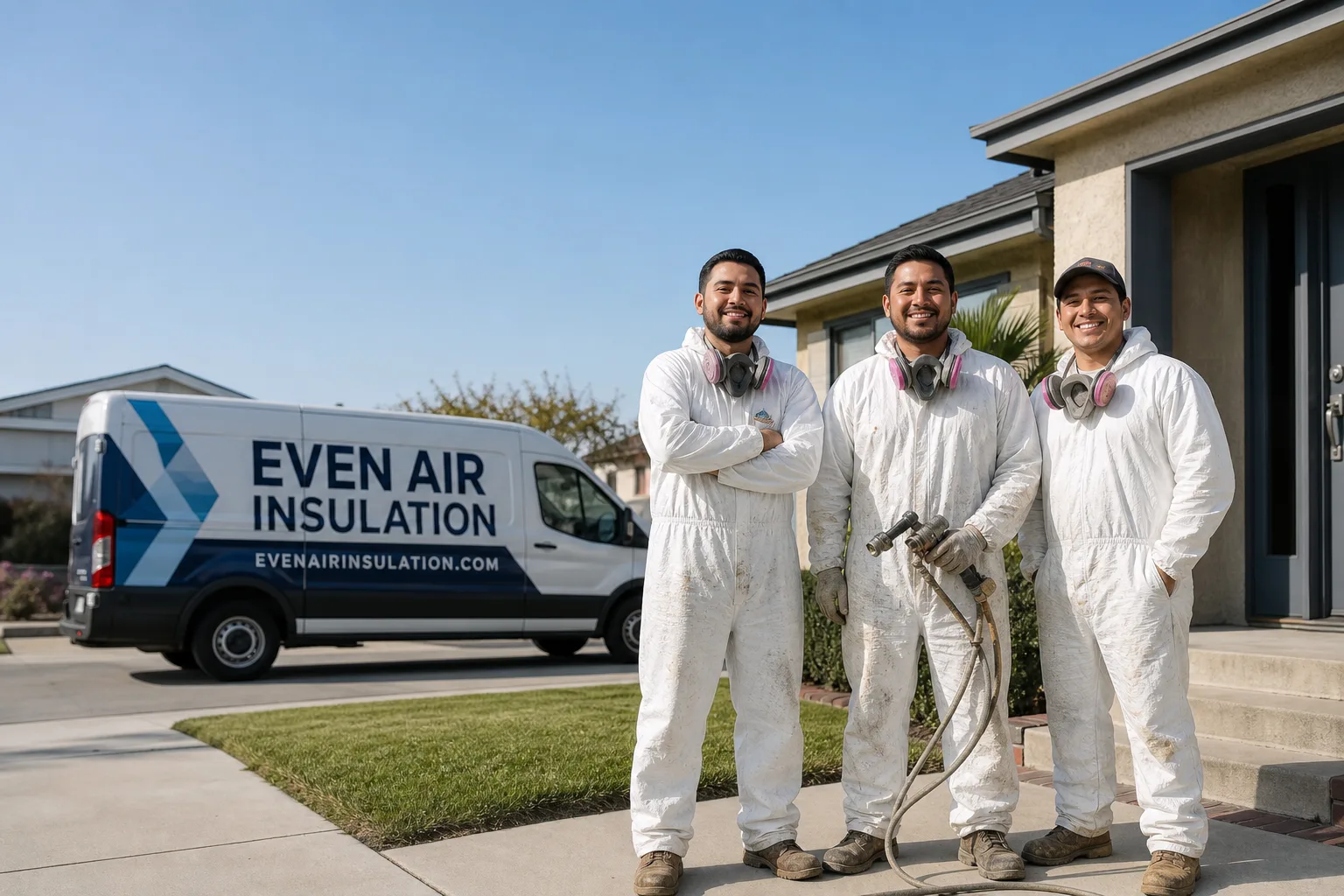
Manhattan Beach homeowners keep calling us back because we don’t arrive with a single product and a sales pitch. We carry eight manufacturer lines (including Owens Corning, Icynene, Demilec, and GreenFiber), so the recommendation you get is based on what your attic actually needs, not what we happen to have on the truck. Nelson Quirarte leads our team with a simple rule: match the material to the moisture profile, the framing type, and the ventilation setup of the specific house. That’s why a 1958 cottage off the sand section gets a different assembly than a 2024 rebuild on Rosecrans.
We work throughout Manhattan Beach weekly, and because we’re based nearby in Koreatown, we can typically be at a job in the Hill Section, the Tree Section, or down near the Strand within a day. That matters when a marine-layer leak has left damp insulation sitting against decking and you don’t want mold spreading while you wait. We understand local building conditions and the Title 24 requirements that come with any teardown or remodel. We’re licensed, insured work, and our reputation in the Beach Cities comes from showing up on time and leaving attics that stay dry.
Attic Cleaning Services in Manhattan Beach
Attic Cleaning Services in Manhattan Beach usually start with a problem: a homeowner notices a musty smell, a contractor finds rodent droppings during a remodel, or a home inspector flags contaminated insulation before a sale. In our experience, sand-section homes near the beach get hit hardest because the marine layer keeps dust and debris damp, which means old insulation turns into something more like a sponge than a thermal barrier. A full attic cleanout in Manhattan Beach typically runs between $1,200 and $2,800 depending on square footage, access, and how much contaminated material needs to be bagged and removed.
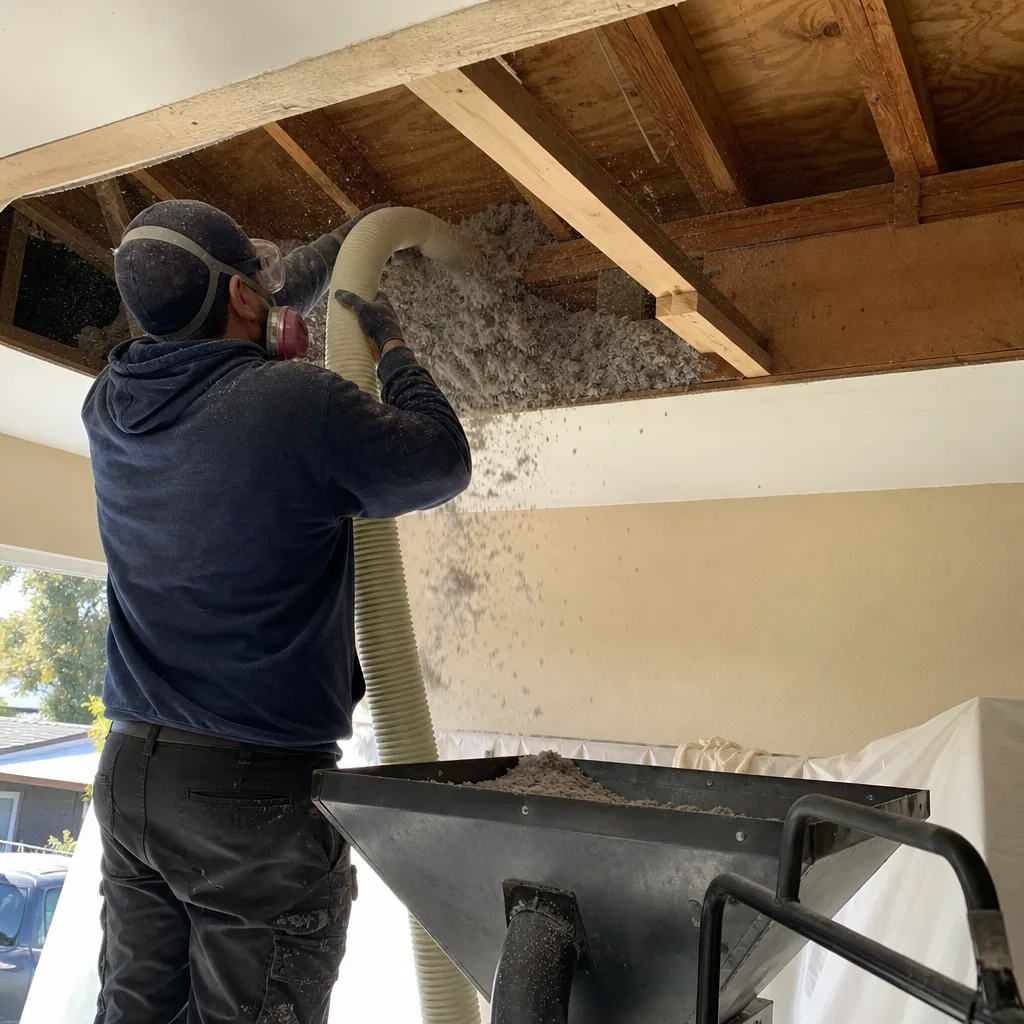
What a cleanout involves here specifically: we remove old batts or blown-in material, vacuum up dust and debris, inspect the decking and framing for moisture damage, and prep the space for whatever comes next. In homes where sea air has been seeping in for decades, we’ll also check for corroded staples, rust on nails, and any sign that condensation has been pooling along the ocean-facing slope. That’s a common problem we’ll detail further down.
Debris and Dust Removal
Decades of sand, dust, and construction debris settle in attics and get into everything. A 1950s cottage in the Tree Section often has layers of fine sand that blew in during original construction and never left. We remove it all before anything new goes in.
Contamination Cleanup
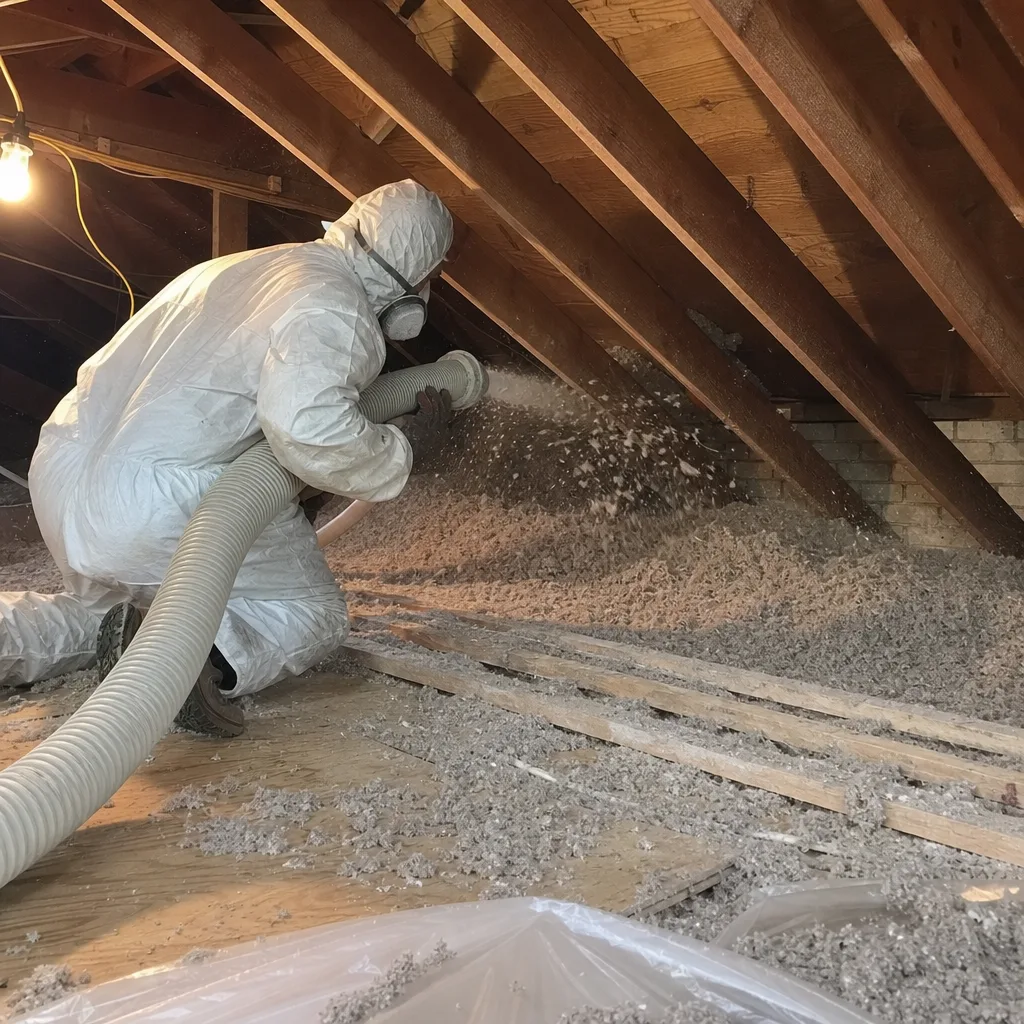
Rodent droppings, old nests, and pest debris require proper containment and removal, not just a quick hose-out. We bag and dispose of contaminated insulation following standard safety protocols, and we’ll tell you honestly if the decking itself needs treatment before new insulation can be installed.
What happens when you call
- 1
A real person answersNo phone trees — you reach a local pro.
- 2
You get an upfront price rangeHonest numbers before anyone is dispatched.
- 3
A background-checked tech heads outLicensed & insured, dispatched right away.
- 4
You approve before work beginsNothing starts until you say go.
Attic Mold Removal in Manhattan Beach
Attic Mold Removal in Manhattan Beach is driven by the marine layer more than any inland climate. The cool, humid air that sits over 90266 most mornings means attic surfaces rarely dry out completely, and in older homes with minimal ventilation, that trapped moisture becomes mold on decking, rafters, and insulation. Mold remediation in a typical Manhattan Beach attic runs from $1,800 to $4,500, with the higher end reflecting cases where marine-layer moisture has been condensing for years and the affected area is widespread.
What the job actually involves: we identify the moisture source first (because removing mold without fixing the air leak means it comes back), then remove and dispose of mold-damaged insulation, treat affected wood surfaces, and prep the attic for airtight sealing. In Manhattan Beach, the moisture source is almost always one of three things: wind-driven rain intrusion on an ocean-facing slope, missing or failed vapor barrier, or unsealed top plates letting damp onshore air pour into the attic cavity every night.
Mold-Source Assessment
We don’t just spray and walk away. Before any mold removal, we trace the moisture path. That means checking roof penetrations, bathroom fan terminations, and the condition of any existing vapor barrier. Without that step, a Manhattan Beach attic will re-mold within a season.
Surface Treatment and Prep
Once damaged material is out, we treat the framing and decking with anti-microbial products designed for coastal humidity loads, then prep the space for air sealing and new insulation. We’ll tell you if the roof deck itself needs further attention from a roofing contractor before insulation should go back in.
Trusted Brands We Service in Manhattan Beach
We work with eight manufacturers precisely so a Manhattan Beach homeowner doesn’t get talked into a product that’s wrong for a coastal attic. For the sand-section bungalows with wind-driven moisture problems, we often specify Rockwool (mineral wool) because it doesn’t hold water the way fiberglass does and it resists mold. For new three-story rebuilds with unvented attic assemblies, Icynene and Demilec open-cell and closed-cell spray foam give us options for different moisture and structural requirements. GreenFiber cellulose is a fit for homeowners prioritizing recycled content and dense-pack air sealing. We keep common Owens Corning and CertainTeed materials staged for quick turnaround on standard attic top-ups in Manhattan Beach, so you’re not waiting on a supply run from the valley.
Common Attic Insulation Problems We See in Manhattan Beach Homes
- Compressed, salt-degraded batt from decades of marine-layer moisture. We open up 1960s bungalows near the Strand and find fiberglass that’s been pounded flat and saturated by years of damp onshore air. It’s not doing anything thermally, and it’s often breeding mold against the decking. This is the single most common failure mode in original Beach Cities construction.
- Missing or failed vapor barrier with unsealed top plates. Many original Manhattan Beach homes were built before vapor management was standard practice. Damp ocean air flows into the attic through every wall top plate, electrical penetration, and recessed light, then condenses on cool surfaces. You can add all the R-value you want; it won’t solve a condensation problem.
- Salt corrosion on staples, fasteners, and any exposed metal. Salt spray doesn’t stop at the roof. Over decades, it works its way into attic cavities and corrodes the staples holding batts in place, the nails in the decking, even the mesh on vent screens. When we do a top-up, we’re often working around corroded hardware that needs attention first.
- Legacy assemblies opened during tear-down/rebuild cycles without proper air sealing. Manhattan Beach is in a constant cycle of demolition and rebuild. When an old bungalow gets torn open for a remodel, the attic is exposed to Title 24 scrutiny. Owners are routinely surprised to find that the old assembly doesn’t come close to current code, and now they need full air sealing and corrosion-resistant facing before anything passes inspection.
Pricing for Attic Insulation in Manhattan Beach, CA
What should you expect to pay? A standard attic insulation top-up in Manhattan Beach, where we blow additional fiberglass or cellulose over existing material, usually runs between $900 and $1,800 depending on the square footage. Full attic insulation replacement, including removal of old material, air sealing, and new install, runs from $2,500 to $5,500. Attic cleaning services fall between $1,200 and $2,800, while mold remediation runs $1,800 to $4,500 as noted above. The biggest variable in Manhattan Beach is what we find when we open the attic: a clean 1990s home with adequate ventilation is a straightforward job, while a 1958 sand-section cottage with damp decking and corroded fasteners costs more because we’re doing moisture work before we ever install insulation. Calls and estimates are free, and we’ll give you a written number before any work starts. Reach us at (855) 362-0195.
We Also Serve Cities Near Manhattan Beach
We work throughout the South Bay and the Beach Cities. If you’re in Redondo Beach, Rolling Hills Estates, Palos Verdes Estates, or Torrance, our Attic Insulation team does the same marine-layer-focused assessment. And if you want to see how we approach Attic Insulation in Manhattan Beach specifically, this page covers the coastal moisture realities in detail.
Serving Manhattan Beach, CA — Our Local Coverage Area
We’re based in the Manhattan Beach area and know this community well. Use the map below to see our service coverage — if you’re nearby, we can almost certainly help.
FAQs About Attic Insulation in Manhattan Beach
Because the moisture load comes from the ocean, not from summer heat. Manhattan Beach sits under a persistent marine layer, meaning cool, damp air moves through attics most of the year. Without a vapor barrier on the warm side of the assembly, that moisture reaches the decking and condenses. Mild summers mean the attic never gets hot enough to bake that moisture back out. A vapor barrier is doing year-round work in 90266, not just seasonal duty.
Compressed, salt-degraded batt, missing or failed vapor barrier, and moisture staining along the ocean-facing slope. The original construction typically had minimal insulation to begin with, and decades of marine-layer air intrusion have done the rest. We often find the staples holding the batts in place have corroded enough that the insulation has partially fallen away from the rafters. If you own an original bungalow and haven’t looked at the attic in years, plan for more than a simple top-up.
Repair makes sense when the insulation is still dry, intact, and adequately thick, and the only issues are isolated air leaks or a small area of compression. Retrofit makes sense when we find widespread moisture damage, failed vapor barrier, inadequate depth for modern code, or when you’re doing a remodel that opens the attic anyway. Given Manhattan Beach’s coastal conditions, most original 1950s-’60s homes we inspect are better candidates for full retrofit than spot repair. The marine layer has simply been working against the old assembly for too long.
Yes. New Manhattan Beach rebuilds are built to current Title 24 energy standards, which often means unvented attic assemblies, rigid-foam exterior sheathing, and spray foam applied to the underside of the roof deck. The air sealing and vapor management strategy is completely different from a ventilated 1960s attic. These projects require precise material selection: open-cell foam for certain moisture-permeable applications, closed-cell for others. We have both through Icynene and Demilec, so the assembly gets what the building science calls for.
Yes, though the mechanism is slower than salt damage to a car. Salt-laden mist enters through vents and unsealed penetrations, settles on insulation and fasteners, and holds moisture against surfaces. Over 30 to 40 years, that means corroded staples, degraded facing, and batt that has lost its loft and is holding moisture instead of resisting it. The closer you are to the Strand, the more pronounced the effect. During a cleanout, we can show you the difference between the ocean-facing slope and the inland-facing slope of the same attic. Call (855) 362-0195 if you suspect salt has compromised your insulation.
If your attic hasn’t been looked at in years, or you’ve noticed musty air, uneven temperatures between floors, or rising energy bills, the most useful first step is an inspection. We’ll open the hatch, assess what’s actually up there, and tell you honestly whether it needs a top-up, a cleanout, or a full replacement. Even Air Insulation serves all of Manhattan Beach, from the sand section up through the Hill Section, with honest material recommendations and coastal-specific building knowledge. Call (855) 362-0195 for a free estimate.
Written by Nelson Quirarte, Owner at Even Air Insulation, serving Manhattan Beach and the surrounding South Bay cities.