Reflectix Insulation in Los Angeles, CA | Even Air Insulation
We provide independent Reflectix insulation service across Los Angeles, from Koreatown Reflectix service in 90005 through 90008 and the surrounding South LA and Central LA neighborhoods. The thing that makes our Reflectix work different here is simple: Los Angeles attics routinely hit 140-150°F in August, so we install and repair Reflectix for what it actually does well in this climate: blocking radiant heat before it becomes a conduction problem. If your attic has a foil layer that’s bubbling, flaking, or sagging, call (855) 362-0195 and we’ll tell you straight whether it’s worth saving.
Why Los Angeles Residents Choose Us for Reflectix Service
We’re a multi-method insulation contractor, and Reflectix is one of the materials we reach for when the situation calls for it, not the only product we know how to hang. Nelson Quirarte, our owner, studied building construction technology at Los Angeles Trade-Technical College and has spent nearly two decades crawling through L.A. attics, from craftsman bungalows in 90007 to mid-century apartment buildings that hadn’t been touched since the Eisenhower administration. That means when we quote Reflectix work, we’re quoting it against what we’ve seen actually happen to foil in South LA attics over a decade of Augusts. We carry the full Reflectix sales & service line, including double-reflective rolls, perforated radiant barrier, and duct wrap. We’re independent, not manufacturer-authorized, which means our recommendation is based on your roofline and your walls, not a quota from a supplier.
Common Reflectix Insulation Problems We Solve in Los Angeles
- Foil delamination on roof-deck installs. When an attic deck spikes past 150°F in August, the adhesive layer on bubble-core Reflectix breaks down and the foil separates from the core. We see this most often on low-slope asphalt shingle roofs in 90003 and 90001, where the deck gets direct sun all afternoon. Repair means removing the delaminated section and re-stapling fresh double-reflective roll with a proper ¾-inch air gap.
- Surface oxidation and pitting from coastal dampness. Marine-layer morning moisture works its way into attics east of the 405 and settles on the aluminum facing. Over two or three summers, that facing turns white and flaky, and the emissivity drops until the Reflectix is basically a mediocre conduction layer. If you’re in View Park-Windsor Hills or Leimert Park and your foil looks chalky, it’s oxidizing, and it’s not doing its job.
- Crushed bubble core in low-clearance flat-roof attics. Many Central LA homes built between 1920 and 1960 have flat or nearly flat roofs with tight rafter bays. A previous installer or a homeowner shuffling through the attic steps on the Reflectix between rafters, collapsing the bubble core. No air gap, no R-value. We pull the damaged section and replace it with uncompressed product, then re-tension and re-tape the adjacent runs.
- Perforated vs. non-perforated mismatch on stucco walls. This one matters in Los Angeles more than most places because our housing stock is overwhelmingly stucco-over-wood-frame. Someone staples non-perforated Reflectix against the exterior sheathing as a wall wrap, and now the wall can’t breathe. Moisture gets trapped against the plaster, and within a couple years you’ve got mold in the cavity. Non-perforated product belongs on the exterior side with a drainage plane; perforated goes where vapor needs to pass.
- Dusty, loosely stapled attic foil that’s actually fine. We get called out for “failed” Reflectix that just needs re-tensioning and re-taping. If the foil is mechanically intact, we don’t automatically replace it. That’s the difference between a contractor who stocks rolls and a contractor who understands what the product is doing up there.
Reflectix Service in Los Angeles: What Local Conditions Mean for Your Equipment
South LA ZIPs like 90001 and 90003 routinely see attic temperatures of 140 – 150°F in August, and that changes the entire equation for Reflectix in Echo Park and nearby neighborhoods. In those conditions, the foil’s emissivity matters far more than its quoted R-value. Reflectix isn’t an attic blanket; it’s a radiant shield, and at 147°F, a bare roof deck is radiating heat directly onto whatever’s below it. Meanwhile, many of the 1920s – 1950s bungalows in these neighborhoods have exactly zero wall insulation. A thick layer of blown-in cellulose in the attic floor won’t stop the west-facing stucco wall from heating the front room to 90°F by 3 p.m. That’s why we frequently prescribe Reflectix as a roof-deck radiant barrier and a west-wall shield in these homes rather than as an attic-floor addition on top of existing insulation. It’s also why we always check the roof-deck temperature and wall orientation before recommending any product. The right insulation for the job, not just the one we happen to stock.
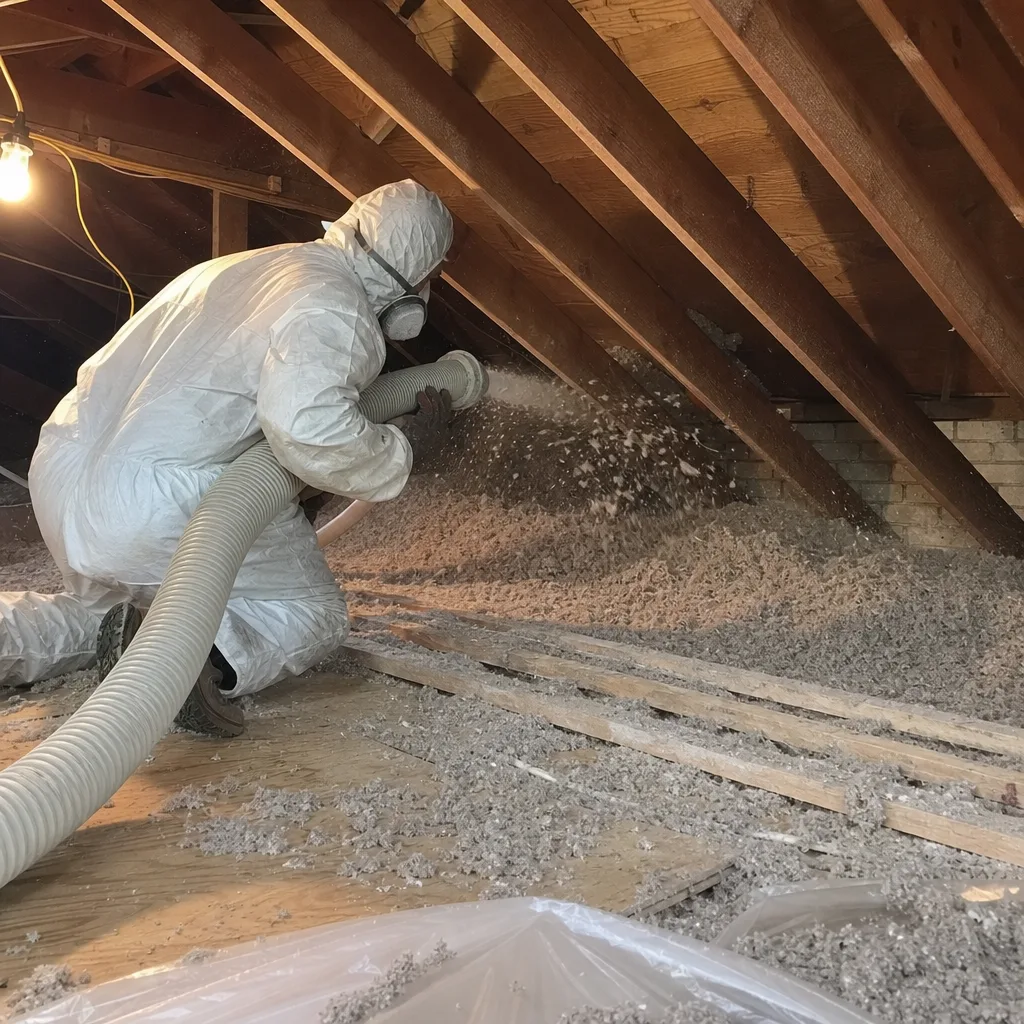
Here’s one from the field. On a 1940s stucco bungalow off Vermont Avenue in 90003, our crew found a bare asphalt-shingle roof deck and attic temps hitting 147°F, with the west-facing plaster wall too hot to touch by mid-afternoon. We stapled Reflectix repair in Silver Lake-style double-reflective roll to the rafter undersides with a ¾-inch air gap, added baffles at the eave vents, and dense-packed the uninsulated west wall cavity. The homeowner’s front room dropped roughly 8°F in the afternoon without touching the AC setpoint. That’s what this product does when it’s installed for the right reason.
Reflectix Models & Products We Service in Los Angeles
We work with the full Reflectix lineup that matters for Southern California homes. That includes Reflectix Double Reflective Insulation Roll with the bubble core, single-sided reflective foil for walls and rim joists, and perforated and non-perforated radiant barrier for roof decks and crawl spaces. We also service Reflectix duct wrap and HVAC insulation products, which takes a beating in uninsulated Los Angeles attics where supply ducts bake under a 140°F deck. On parts, we stock genuine Reflectix rolls and the matching foil tape so the facing and bubble height match the spec. No generic foil-bubble substitutes that crush underfoot the first time someone crosses the attic. If an existing Reflectix layer is mechanically intact but dusty or loosely stapled, we re-tension and re-tape it. Full replacement is reserved for delaminated, compressed, or moisture-trapped product.
Reflectix Service Pricing in Los Angeles
Reflectix service in Hollywood and across Los Angeles typically runs between $1.50 and $3.00 per square foot installed, depending on whether it’s a simple attic-floor layup, a roof-deck stapling job with baffles, or a wall-cavity application that requires access and prep. A typical 1,200-square-foot attic roof-deck radiant barrier install lands between $1,800 and $3,600. Duct wrap jobs usually fall between $800 and $1,500 depending on how much exposed duct you have. The big variables are attic access, roof pitch, and whether we’re repairing an existing install or starting fresh. A free estimate includes an attic inspection with temperature readings and a straight answer about whether Reflectix is the right call or you’d be better served by something else. Call (855) 362-0195 for an exact quote; estimates are free and we won’t upsell you into a product your roofline doesn’t need.
Serving Los Angeles, CA — Our Local Coverage Area
We’re based in the Los Angeles area and know this community well. Use the map below to see our service coverage — if you’re nearby, we can almost certainly help.
FAQs – Reflectix Insulation in Los Angeles
Yes, but only if it’s installed on the roof deck or rafter undersides, not on top of the attic floor insulation. In Los Angeles, where attics hit 140-150°F in August, the radiant barrier blocks solar heat before it reaches the blown-in layer and soaks into it. If the Reflectix is laid flat on top of the blown-in insulation with no air gap facing the roof, it does almost nothing and will collect dust within two years. Call (855) 362-0195 and we’ll inspect your attic and tell you what’s actually worth doing.
No, and this is where we see the most mistakes in Central LA. Reflectix requires a ¾-inch air gap on the foil side to work as a radiant barrier. If you staple it tight against the roof deck with no gap, the foil conducts heat directly to the core, and you’ve installed an expensive, thin blanket. On low-slope roofs, we install it on the rafter undersides with staples and baffles at the eave vents to maintain that gap and passive airflow.
That’s aluminum oxidation, and in Los Angeles it’s usually driven by marine-layer morning dampness that settles in the attic and sits on the foil surface. Once the emissivity of the aluminum facing drops, the Reflectix stops reflecting radiant heat effectively. If the oxidation is surface-level, it sometimes makes sense to replace just the affected sections. If it’s widespread, full replacement is the honest call. We can tell you which one you’re looking at over the phone or in person.
It can be, but not as the only layer. In stucco-over-wood-frame bungalows with empty wall cavities, dense-pack cellulose is typically the primary wall insulation, and Reflectix works as a radiant shield on the sun-baked west and south sides. The key is using the right product: perforated Reflectix if vapor needs to pass, and always with proper drainage plane details in mind. Non-perforated product trapped against plaster is a mold risk. Our crews install both materials together when the wall orientation calls for it. Call (855) 362-0195 for a wall assessment; estimates are free.
It comes down to what your attic is doing. If the roof deck is bare and the attic hits 140°F in the summer, a radiant barrier like Reflectix on the rafter undersides is often the highest-return, lowest-cost fix. If you’re trying to create a conditioned attic, stop air leakage, and address moisture, spray foam is the better tool. We install both, through Icynene and Demilec for foam and Reflectix for radiant barrier, so the recommendation is based on your roof, not our inventory. Call (855) 362-0195 and we’ll walk the attic with you.
Service Areas Near Los Angeles
We run Reflectix service throughout the Los Angeles basin, including Los Angeles service area work from 90001 through 90008. If you’re west of downtown, we handle Reflectix service in West Hollywood with the same attention to flat-roof and stucco-wall details. And for homes off Crenshaw and La Brea, Reflectix service in View Park-Windsor Hills covers the hillside streets where afternoon sun hits hardest. We also reach Rosemead, Altadena, and Manhattan Beach for scheduled work.
Book Your Reflectix Service in Los Angeles Today
If your attic is under a bare roof deck and your west rooms cook every afternoon, we can fix that. Call (855) 362-0195 for a free estimate, and if it’s August and the attic is already baking, ask about same-day availability. Even temperatures. Even energy bills. Even air.
Written by Nelson Quirarte, Owner at Even Air Insulation, serving Los Angeles and the surrounding basin.