Fast, Reliable Attic Insulation Across Whittier
Attic insulation in Whittier typically costs $1,800 – $4,200 for a full retrofit on a 1,200 – 1,800 sq ft home, with blown-in fiberglass running $1.50 – $2.80 per square foot and spray foam at $3.50 – $6.50 per square foot. Most Whittier homes we see were built between the 1920s and 1970s with little or no attic insulation, which means cooling season hits hard when attic temperatures climb past 130°F. We work throughout Whittier’s ZIP codes 90601 through 90612, including the hillside streets above uptown and the flat ranch tracts to the south. If your upstairs rooms run 8 – 10 degrees hotter than downstairs, call (855) 362-0195 for a free estimate.
Why Even Air Insulation Is Whittier’s Preferred Attic Insulation Company
Whittier homeowners call us because we solve the problems other contractors miss. The hillside neighborhoods here like Friendly Hills and the streets climbing up from uptown Whittier have attic ventilation systems that were never designed for modern insulation depth. A crew that just blows in fiberglass and leaves creates a dust trap that Santa Ana winds exploit within months. We don’t do that.
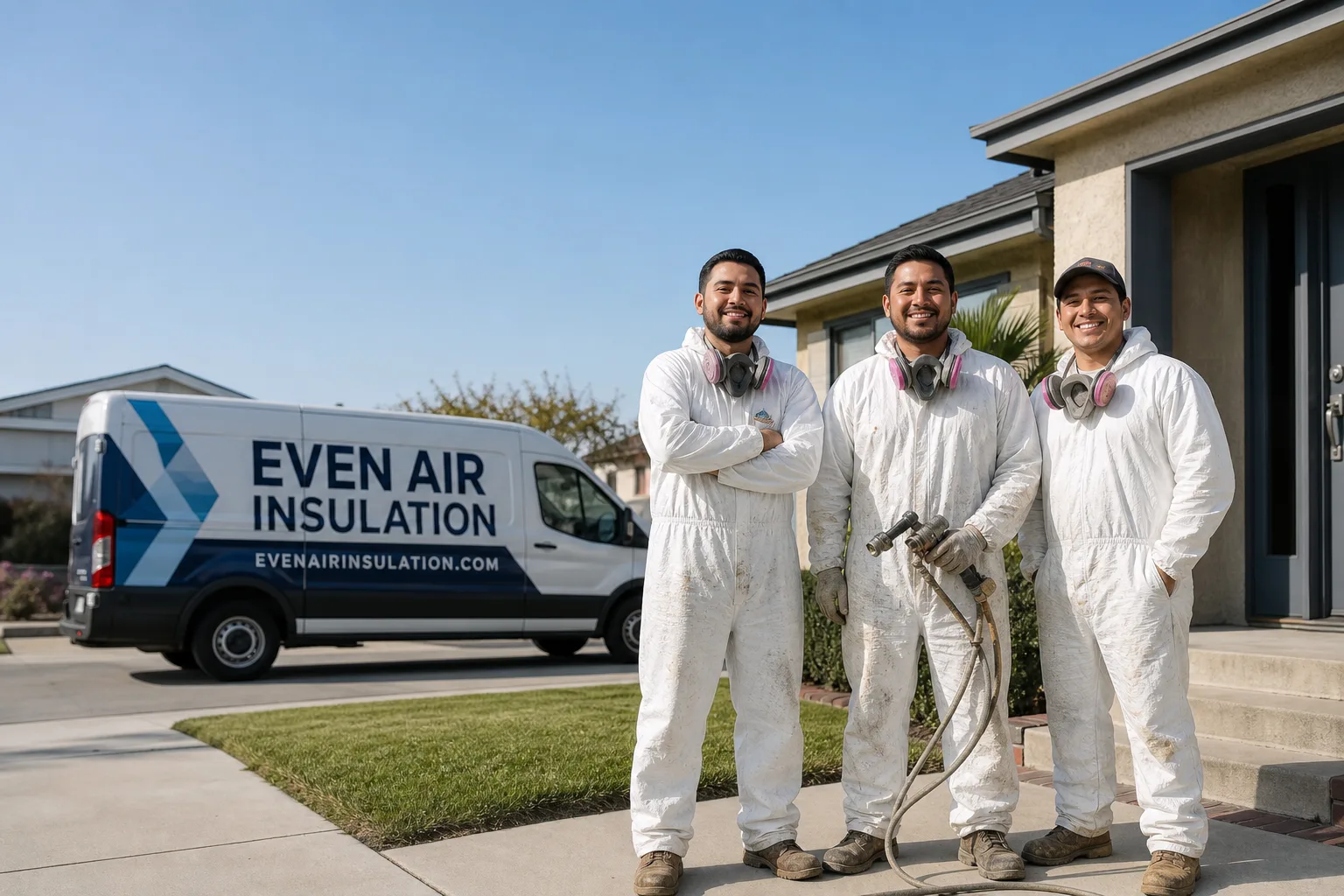
Our crew is trained in three distinct installation methods: Attic Insulation via blown-in cellulose, fiberglass batt, and spray foam across two professional-grade product lines. That matters in Whittier because the right material for a 1950s ranch near Michigan Park is often wrong for a 1920s Spanish Colonial bungalow above Greenleaf Avenue. We match the method to the house, not to what’s sitting in our truck.
Nelson Quirarte leads our team with a simple operating rule: prescribe the material that solves the homeowner’s problem, then install it correctly. That’s why we carry GreenFiber cellulose for retrofit jobs where recycled content matters, Owens Corning fiberglass for open attics with proper venting, and Icynene spray foam for hillside homes that need air-sealing before insulation goes in. When you call Whittier, you get a crew that already knows the housing stock.
Insulation Contractors in Whittier
Insulation Contractors in Whittier handle the most common retrofit scenarios: topping up attics that have settled fiberglass from the 1980s, blowing cellulose into homes that were built with nothing at all, and replacing insulation that rodents or roof leaks have destroyed. A typical top-up on a Whittier ranch runs $900 – $1,600. Full attic replacement on a 1,500 sq ft home lands between $2,200 and $3,800 depending on depth and material.
Air-Sealing Before Insulation
Most Whittier attics have dozens of small air leaks: wire penetrations, top plates, recessed can lights, and the gap where the chimney passes through. We seal these before adding insulation because blowing fiberglass over an unsealed attic is like wearing a down jacket with the zipper open. In hillside homes specifically, sealing matters double because negative pressure from wind exposure pulls even more conditioned air out.
Knob-and-Tube Safe Insulation
Older Whittier homes near uptown still have knob-and-tube wiring running through the attic. You cannot safely blow cellulose or fiberglass over live knob-and-tube circuitry without creating a fire risk. We inspect first, coordinate with a licensed electrician if needed, and only then install insulation. This is not a corner we cut, and any contractor who says otherwise should make you nervous.
Attic Ventilation in Whittier
Attic Ventilation in Whittier is the step most retrofit jobs skip, and it’s the step that determines whether your new insulation performs for 20 years or fails within two. Whittier’s older bungalows and Spanish Revival homes were built with gable vents or small soffit vents sized for an uninsulated attic. Add 18 inches of blown fiberglass and those vents can’t move enough air. Heat builds up, moisture condenses, and insulation compresses.
Baffle Installation in Hillside Homes
In Friendly Hills and the streets above uptown Whittier, we install baffles at every rafter bay before blowing insulation. These baffles keep the soffit vents clear so air can flow from the eaves up to the ridge. Without them, insulation blocks the intake vents and the whole ventilation system shuts down. Worse: Santa Ana winds blowing across those exposed hillsides force dust through the eaves and straight into the new insulation.
Knee-Wall Attic Ventilation
Spanish Revival homes in Whittier often have knee-wall attics, those short triangular spaces behind upstairs walls. They trap heat and moisture because the original builders treated them as dead space. We add ventilation and air-seal the knee wall before insulating, otherwise the space turns into a hot, humid box that degrades the insulation and whatever’s stored there.
Trusted Brands We Service in Whittier
We stock and install materials from eight manufacturers, which means we’re not locked into whatever brand a single distributor pushes this quarter. For Whittier attics, we rely on GreenFiber blown-in cellulose for retrofit jobs where the recycled content and air-blocking density help in older loose-fill spaces. We carry Owens Corning fiberglass for open attics with proper ventilation and predictable R-value per inch. And we use Icynene spray foam in hillside homes where the attic needs air-sealing as much as insulation, because open-cell foam at the roofline turns a vented attic into conditioned space. Even Air Insulation means we pick the right product for the house on Mar Vista Street or the tract off Colima Road, not the easiest one to install.
Common Attic Insulation Problems We See in Whittier Homes
- Bare attics in 1950s – 60s ranch tracts: Builders in post-war Whittier subdivisions often skipped attic insulation entirely or laid a two-inch fiberglass batt that’s now compressed to nothing. These homes leak conditioned air straight through the ceiling.
- Santa Ana wind dust infiltration in hillside zones: Above uptown and in Friendly Hills, missing baffles let wind-driven dust pack into blown insulation. The R-value drops within a single season because the insulation is clogged with fine silt.
- Top plate and can light air leaks: Original construction in Whittier didn’t include air-sealing. Even after new insulation goes in, warm air pours through top plates, recessed lights, and plumbing penetrations, so rooms stay hot and bills stay high.
- Knee-wall heat trapping in older Spanish-style homes: The knee-wall attics common in Whittier bungalows weren’t vented or sealed properly. They become superheated air pockets that radiate through upstairs walls all afternoon.
Pricing for Attic Insulation in Whittier, CA
Here’s what Whittier homeowners can expect to pay in 2026. A basic top-up of blown-in fiberglass in a standard attic runs $950 – $1,700. A full attic replacement with air-sealing, baffles, and new blown insulation runs $2,400 – $4,000 for most homes. Spray foam at the roofline runs $4,500 – $7,500 depending on square footage and whether we’re doing open-cell or closed-cell. Homes with knob-and-tube wiring may add electrical work outside our scope, but we’ll coordinate that before we start. Every quote includes a written breakdown and a free on-site inspection. Call (855) 362-0195 and we’ll come measure your attic, no charge.
We Also Serve Cities Near Whittier
Our crews handle Attic Insulation in Whittier and the surrounding communities daily. We work regularly in South Whittier, West Whittier-Los Nietos, East La Mirada, and Santa Fe Springs, so response times stay short and we know the housing stock in each area. If you’re on the edge of Whittier and wondering whether we cover your street, call us. Chances are we were nearby last week.
Serving Whittier, CA — Our Local Coverage Area
We’re based in the Whittier area and know this community well. Use the map below to see our service coverage — if you’re nearby, we can almost certainly help.
FAQs About Attic Insulation in Whittier
Whittier’s hillside homes, especially in Friendly Hills and above uptown, sit exposed to Santa Ana winds that push dust through any open eave vent. Baffles keep the soffit vents clear so airflow continues after insulation is installed, and air-sealing stops wind-driven dust from entering through top plates and penetrations. Skip these steps and the new insulation clogs with silt within a season, losing R-value fast. Call (855) 362-0195 and we’ll check your vent setup before recommending any insulation depth.
Start with air-sealing, then blow in cellulose or fiberglass to R-49. Whittier’s 1950s ranches typically have accessible attics with adequate roof pitch, which makes blown-in insulation the most cost-effective retrofit at $1.50 – $2.80 per square foot. We recommend GreenFiber cellulose for these jobs because its density blocks airflow better than loose fiberglass and fills the odd cavities in older framing.
Whittier attics spend months above 120°F because the city sits in the inland San Gabriel Valley with intense sun exposure and limited coastal breeze. That radiant heat pushes through the ceiling into living space, so insulation here works mainly as a radiant barrier against downward heat flow. The right depth and material matters more in Whittier than in coastal cities: an under-insulated attic in a Whittier summer can add $80 – $150 to a monthly cooling bill.
Yes, but with a required inspection first. Blowing insulation over live knob-and-tube wiring creates a fire hazard because the insulation traps heat around old cloth-wrapped conductors. We evaluate the attic, identify any active knob-and-tube circuits, and coordinate with a licensed electrician to address the wiring before we install anything. Nelson Quirarte has handled enough of these Whittier attics to spot the issues in the first walkthrough.
For Whittier’s cooling-dominated climate, we recommend R-49 in vented attics, which is roughly 16 – 18 inches of blown fiberglass or 12 – 14 inches of cellulose. That exceeds the current building code minimum of R-30 for this climate zone, and it’s the level where homeowners actually feel the difference in upstairs rooms. Hillside homes that get more wind exposure often benefit from R-49 plus full air-sealing, because wind pressure amplifies air leakage losses.
If your Whittier attic is underperforming, call (855) 362-0195. We’ll inspect it, explain exactly what’s going on in your specific house, and give you a written estimate. Free, no obligation, and we’ll tell you straight if your current insulation is fine.
Written by Nelson Quirarte, Owner at Even Air Insulation, serving Whittier and the surrounding San Gabriel Valley communities.