Fast, Reliable Attic Insulation Across San Marino
Attic insulation in San Marino typically costs $2,800 – $7,500 depending on the home’s size, the attic’s condition, and whether the project goes through the city’s architectural review process. Most jobs we handle in San Marino take one to three days once the material schedule is approved. If you’re dealing with a converted attic that bakes in summer or original 1920s loose fill that’s settled to nothing, call us at (855) 362-0195. We know what these estates need because we’ve worked inside them, and we understand the submittal paperwork that San Marino requires before a single batt goes in.
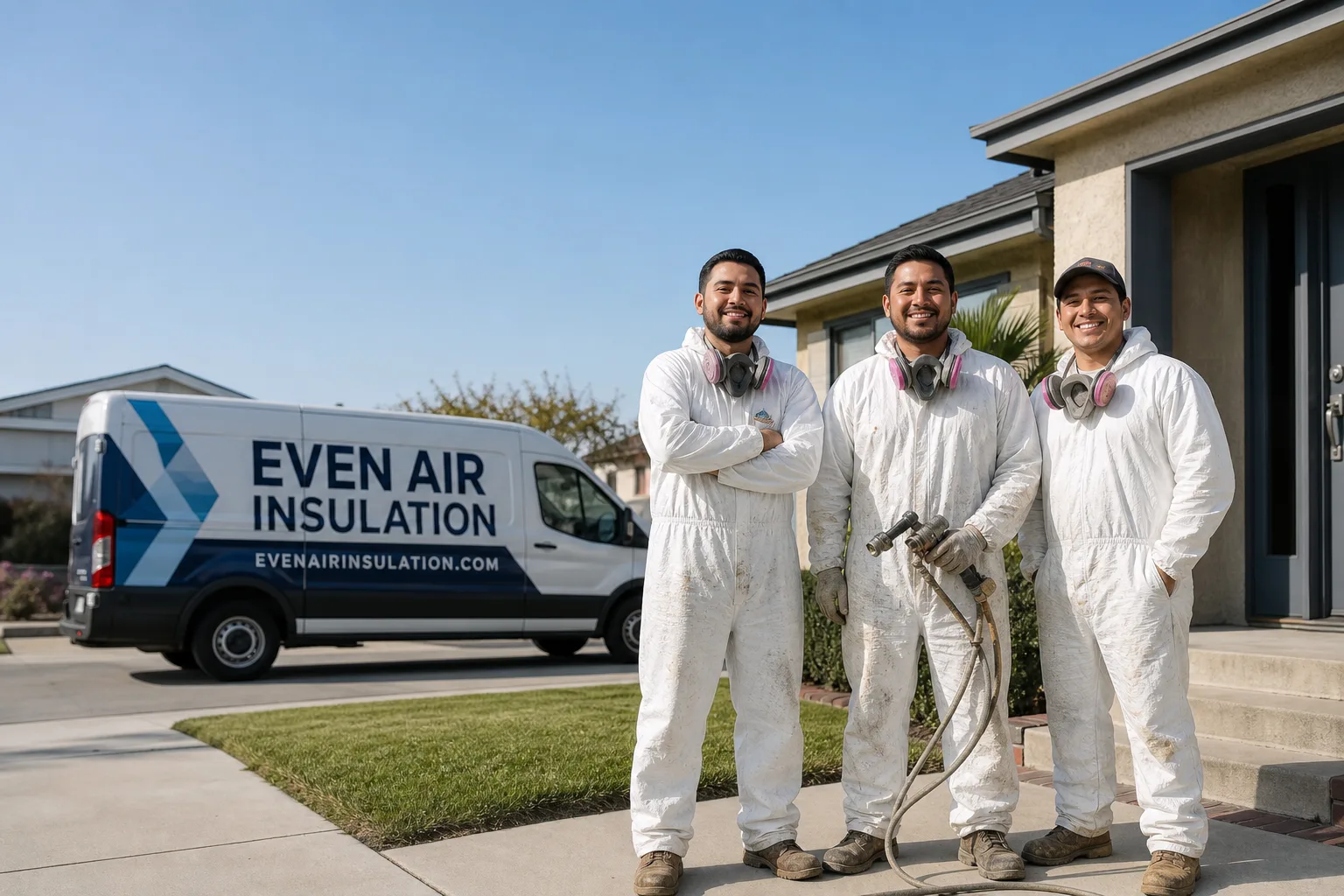
Even Air Insulation has spent years working on the large traditional homes that define this city, from the estates near Lacy Park to the properties tucked off Huntington Drive. Our crews know the difference between a standard retrofit and a San Marino retrofit. That difference usually comes down to documentation, material compatibility, and respecting what was built here in the 1920s and 1930s. When you call, you’ll speak with someone who can talk through your roofline, your submittal timeline, and which of our Attic Insulation methods makes sense for your specific house, not a generic script.
Why Even Air Insulation Is San Marino’s Preferred Attic Insulation Company
Most insulation contractors can blow cellulose into an attic. Fewer can explain why a 1928 estate near the Huntington Library needs a different air-sealing approach than a 1980s ranch in Alhambra. Nelson Quirarte built Even Air Insulation around that distinction. We’re a multi-method specialist, which means we recommend from eight manufacturer lines, not from whatever pallet is sitting in the warehouse. That matters in San Marino because the right material often depends on a home’s age, its roofline, what the city will approve, and whether the attic is original or has been converted.
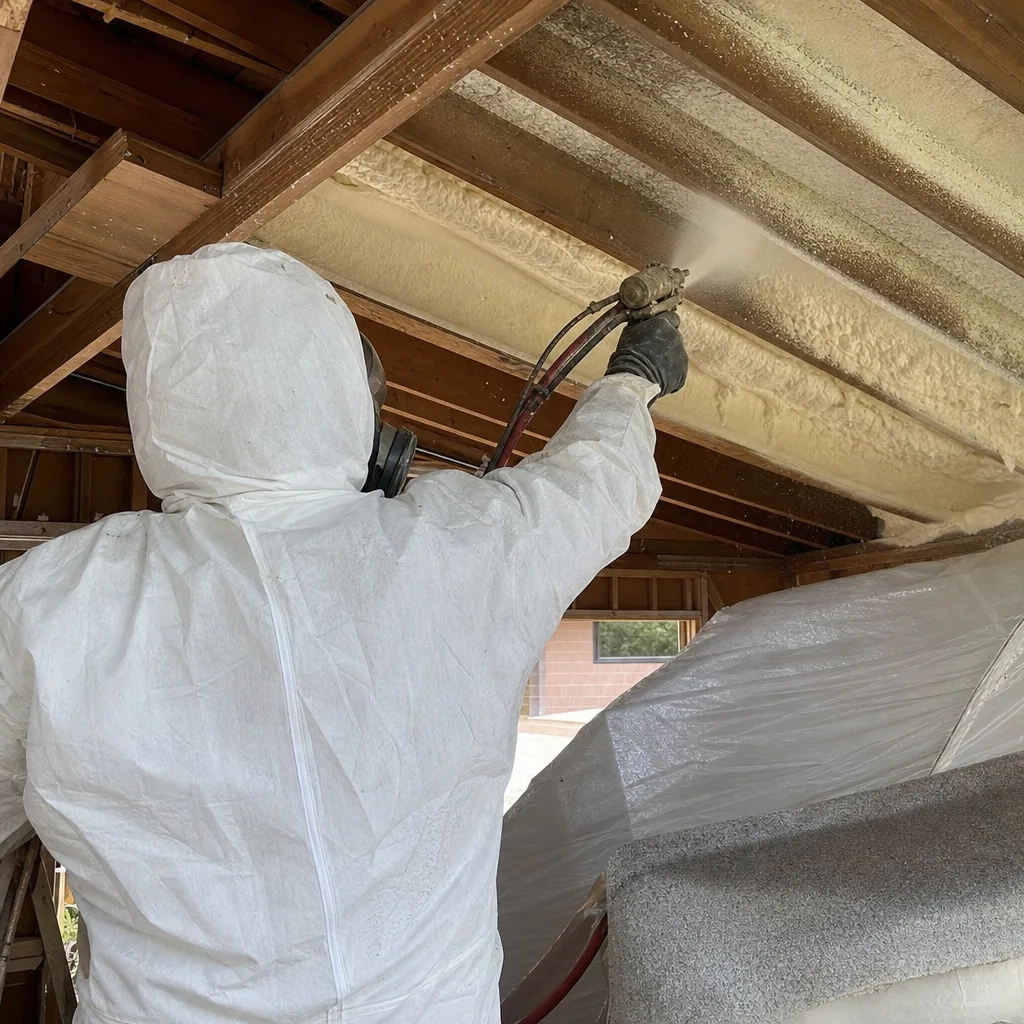
San Marino homeowners consistently tell us the same thing: they’d rather have a contractor who says “here’s why Rockwool fits this attic better than open-cell foam” than one who pushes a single product. We carry Icynene and Demilec for spray foam, GreenFiber for cellulose, and Rockwool for mineral wool. Each has a job it does best on these older custom homes. Our San Marino work has included everything from documenting R-value schedules for design review to cleaning out attics that haven’t been touched since the Coolidge administration.
Response time to San Marino is typically next-day for estimates and within a week for scheduled installation. For emergency situations, like a failed radiant barrier discovered mid-permit review, we can usually get a crew out for Reflectix repair in San Marino within 48 hours. Call (855) 362-0195 and tell us what you’re dealing with. We’ll give you a straight answer about timing.
Radiant Barrier in San Marino
Radiant barrier in San Marino is often the difference between an upstairs that stays livable through August and one that climbs past 90 degrees by 3 p.m. The city’s hot, dry summers and mild winters create daily temperature swings of 30 degrees or more, and older attics with original framing absorb that heat all afternoon and radiate it back into the house all night. A radiant barrier installed on the underside of the roof deck reflects that heat before it ever enters the attic assembly. For a typical 2,500 – 3,500 square foot San Marino estate, a radiant barrier installation runs $1,800 – $4,200 depending on attic accessibility, roofline complexity, and whether we’re working around existing ductwork or stored items.
What makes San Marino different is that radiant barrier and cool-roof materials sometimes trigger design-review scrutiny, especially on homes within or near historic districts. The city wants to know what’s changing and whether it affects the home’s exterior appearance or original materials. Nelson Quirarte’s team has handled enough of these submittals to prepare the documentation correctly the first time. On a 1920s plaster-walled estate near Lacy Park, our crew found the converted attic living space baking under an unvented original roof assembly, so we paired a radiant barrier with Rockwool batts to keep R-value documented and compatible with the historic submittal. We matched the material schedule to the city’s architectural review package, then cleaned out decades of old loose fill before the new assembly went in. That’s the level of care these houses demand.
Unvented Attic Assemblies in Older Homes
Many San Marino estates built between 1920 and 1940 have attics that were never engineered for modern ventilation. The original builders relied on passive airflow through gable vents and the gaps in old wood framing. When a radiant barrier goes in without addressing that ventilation story, performance collapses. We document the existing assembly before recommending anything, and we coordinate the barrier with whatever ventilation improvements the roofline can support.
When Design Review Requires Documentation
If your home sits within a San Marino historic district or carries a Mills Act designation, expect the city to ask for material schedules, R-value calculations, and sometimes a description of how the barrier integrates with original framing. That’s not a hurdle to work around; it’s part of doing the job right here. We’ve submitted these packages before and know what the reviewers look for.
Attic Cleaning Services in San Marino
Attic cleaning services in San Marino are a starting point for most of the work we do on these older homes. Decades of loose fill, rodent activity, dust, and occasional roof leaks leave attics in condition that no new insulation should cover up. We remove old material, address any contamination, and prepare the space for whatever new assembly makes sense. For a typical San Marino attic, full cleaning and debris removal runs $900 – $2,600 depending on attic size, access difficulty, and the condition of what’s up there. Homes with converted attic living spaces or deeply recessed eaves take longer; detached garages and accessory structures add to the scope.
The real reason cleaning matters in San Marino is documentation. When the city reviews your submittal, they want the existing assembly described accurately. If you’re replacing original loose fill that’s compressed to an R-value of 4 in some places and 0 in others, that changes the energy model. We photograph, measure, and describe what we find so your paperwork matches reality. On a 1920s estate with plaster walls and lathe-and-plaster ceilings, we’re careful about how we access the attic so we don’t crack original finishes below.
Removing Old Loose-Fill and Contaminants
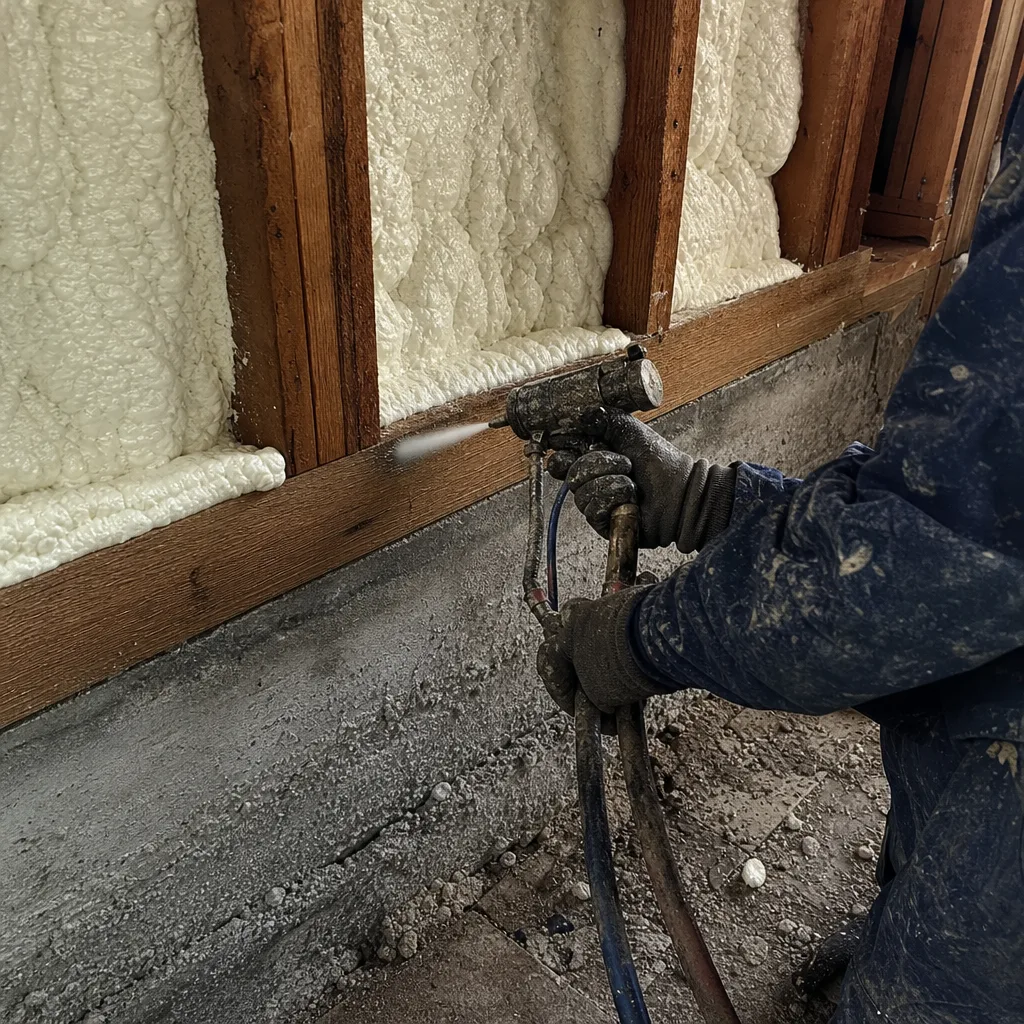
San Marino homes of this era often have a mix of old cellulose, vermiculite in some cases, and fiberglass batts patched in over the years. We remove it all, bag it properly, and leave the attic deck clean enough to inspect. If we find rodent activity or signs of water intrusion, we photograph and report before anything new goes in, because those problems will undo any insulation job within a year.
Preparing Attics for New Insulation
Once the space is clean, we air-seal the attic floor where it makes sense, check baffle placement at the eaves, and verify that any can lights or chases are properly addressed. In homes near Huntington Drive with mature trees, we also look for signs of pest entry that would need sealing before insulation goes in. A clean attic is a blank slate, but only if the prep work is done with the same care as the insulation itself.
What happens when you call
- 1
A real person answersNo phone trees — you reach a local pro.
- 2
You get an upfront price rangeHonest numbers before anyone is dispatched.
- 3
A background-checked tech heads outLicensed & insured, dispatched right away.
- 4
You approve before work beginsNothing starts until you say go.
Trusted Brands We Service in San Marino
Even Air Insulation is not tied to a single manufacturer, which matters in San Marino where the right product often depends on the home’s architecture and review requirements. For historic homes where fire resistance and sound dampening matter, we use Rockwool mineral wool. For converted attics that need high R-value per inch without major framing changes, we turn to Icynene or Demilec closed-cell spray foam. For homeowners who want a recycled-content product that performs well in standard attic floors, GreenFiber cellulose is the move. We also work with Owens Corning, Johns Manville, Knauf, and CertainTeed for batt applications. The material choice follows the application, not the other way around. San Marino homeowners appreciate that we’re not trying to fit their 1920s estate into a product we happen to stock this month.
Common Attic Insulation Problems We See in San Marino Homes
- Unvented original roof assemblies that overheat converted attics. The original builders of these 1920s and 1930s estates didn’t plan for attic living space. When attics were later converted, many got insulation but not ventilation, so summer temperatures climb regardless of what’s in the floor. Radiant barrier paired with ventilation corrections is usually the fix.
- Radiant barrier or cool-roof materials chosen without checking the submittal against historic-district design review. We’ve seen cases where a homeowner installed a barrier that was never documented properly, and the city caught it during a later permit review for something else. That can force a tear-out. We know the review process and submit correctly the first time.
- Settled loose-fill from the original construction era that’s now performing at a fraction of its original R-value. Original San Marino attics often have loose fill compressed to nothing over 80 years, leaving the plaster ceilings below as the only real thermal barrier. A top-up or full replacement depends on what we find, but the energy math is usually dramatic.
- Converted attic living spaces insulated to ordinary retrofit R-values without accounting for complex rooflines or detached structures. Many San Marino estates have dormers, intersecting gables, and detached garages with their own attic spaces. A standard R-38 attic floor number doesn’t translate when half the space is conditioned. We model each assembly on its actual geometry, not a generic checklist.
Pricing for Attic Insulation in San Marino, CA
Blown-in attic insulation for a standard 1,500 – 2,500 square foot San Marino home runs $1,600 – $3,400. Attic batt insulation runs $1,400 – $3,100 depending on the material (fiberglass on the lower end, Rockwool on the higher). An attic insulation top-up over existing material typically costs $900 – $1,800. Full attic insulation replacement after cleaning and prep runs $2,500 – $5,600. Attic baffles and ventilation prep add $400 – $1,200 to a project. These ranges reflect the labor, materials, and the documentation work that San Marino’s review process sometimes requires. Your exact number depends on square footage, access, the condition of the existing assembly, and whether design review applies. Call (855) 362-0195 for a free estimate. We’ll walk the attic with you and give you a number in writing.
We Also Serve Cities Near San Marino
Even Air Insulation works across the San Gabriel Valley. Besides San Marino, we regularly handle Attic Insulation projects in San Gabriel, East San Gabriel, Alhambra, and East Pasadena. The housing stock changes from one city to the next, and we adjust our material recommendations accordingly. If you’re just outside San Marino and wondering whether we cover your street, call (855) 362-0195.
Serving San Marino, CA — Our Local Coverage Area
We’re based in the San Marino area and know this community well. Use the map below to see our service coverage — if you’re nearby, we can almost certainly help.
FAQs About Attic Insulation in San Marino
Yes, for many homes, especially those within or near historic districts. San Marino’s architectural review process often requires a submittal package that documents R-values, material types, and how the insulation integrates with original construction. Even Air Insulation has experience preparing these packages and can advise you early in the process whether your project needs one. Call (855) 362-0195 and describe your home’s location and age; we’ll tell you what to expect.
Rockwool mineral wool is often the best fit for historic San Marino attics because it’s fire-resistant, dimensionally stable, and doesn’t hold moisture against original framing. GreenFiber cellulose works well for attic floors where a recycled-content product is preferred. CertainTeed fiberglass batts are a solid choice for standard cavity work. The right brand depends on the assembly, not the label. We carry all three and will show you why one fits your attic better than another.
San Marino’s hot, dry summers with large daily temperature swings mean converted attic spaces absorb heat through the roof deck all afternoon. A radiant barrier reflects that heat before it enters the living space, which can reduce cooling loads dramatically in unvented original assemblies. Without it, the attic becomes an oven. In a city where many homes have converted attic rooms, this is one of the highest-impact upgrades you can make.
Yes, and we recommend it. Attic cleaning removes old loose fill, rodent debris, and contamination so the new insulation performs as specified. For 1920s estates with plaster ceilings, we work carefully to avoid disturbing original finishes. We also document what we find, which helps if your project goes through architectural review. Call (855) 362-0195 to schedule an attic assessment in San Marino.
San Marino sits in a high-fire zone, and Title 24 cool-roof and wildfire requirements can influence material choices. Some radiant barrier products and roof assemblies are reviewed more closely in this context, and the city may ask for documentation showing the materials meet current codes. We work with the local requirements and can match your insulation package to what the review will accept. This is one of the reasons choosing a contractor familiar with San Marino specifically matters.
If you’re ready to get your attic insulated properly, call Even Air Insulation at (855) 362-0195. Nelson Quirarte and our team will walk you through the materials, the process, and any documentation your home needs. Estimates are free, and we’ll give you a straight answer about what your attic actually needs.
Written by Nelson Quirarte, Owner at Even Air Insulation, serving San Marino and the San Gabriel Valley.