Fast, Reliable Attic Insulation Across South San Jose Hills
Attic insulation in South San Jose Hills has to solve a specific problem: attics here routinely hit 140°F or higher on summer afternoons, far beyond what coastal LA homes experience. That heat pushes into living spaces, overworks air conditioners, and cooks older insulation until it collapses and loses its R-value. We’re Even Air Insulation, and we’ve been working in this part of the San Gabriel Valley long enough to know that generic insulation advice doesn’t cut it here. You need the right material, the right ventilation, and the right air-sealing; done in that order. Call us at (855) 362-0195 for a free estimate, and we’ll come out to South San Jose Hills to see what your attic actually needs.
Why Even Air Insulation Is South San Jose Hills’s Preferred Attic Insulation Company
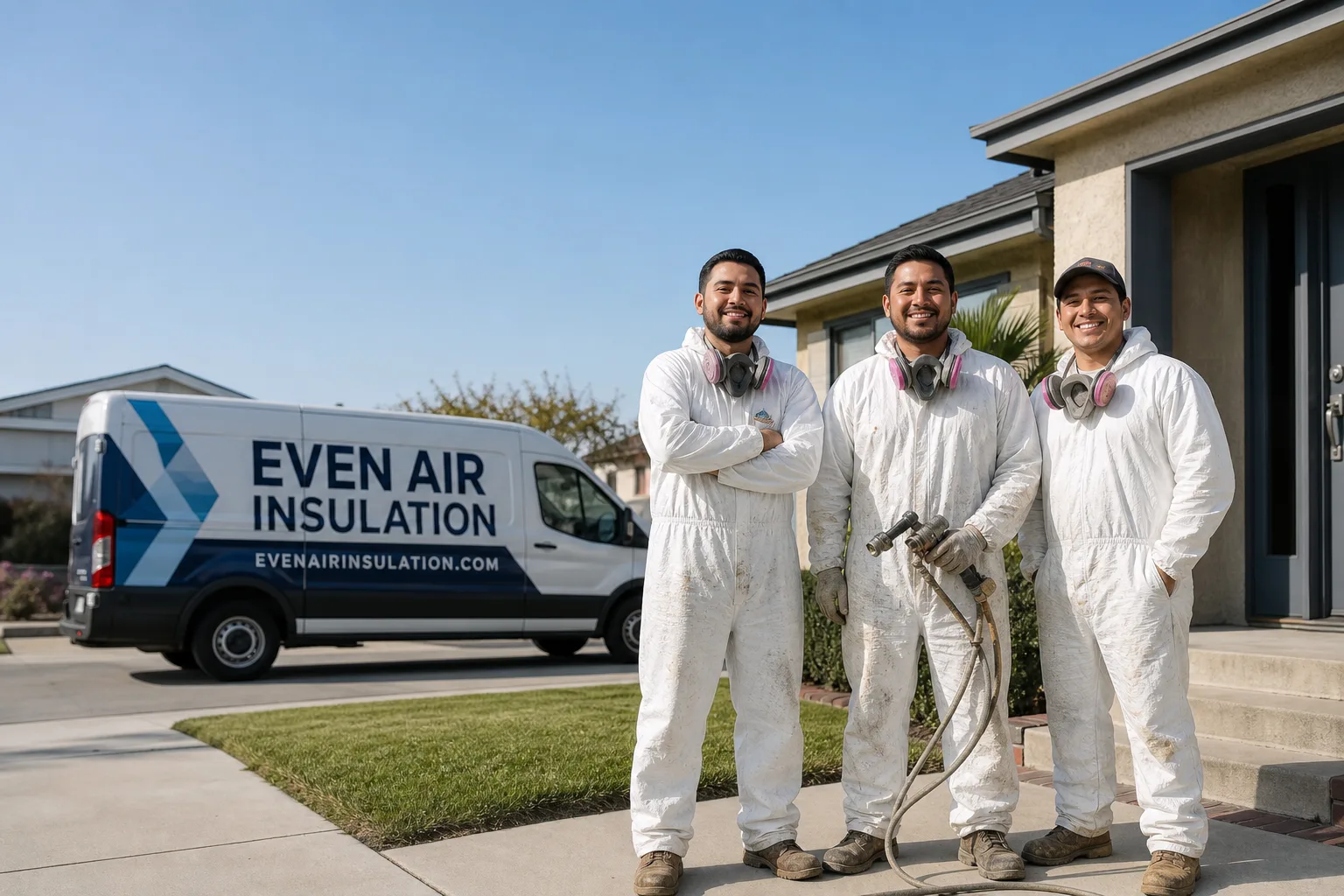
Our Attic Insulation team works throughout South San Jose Hills and the surrounding 91792 area. Nelson Quirarte leads our crew, and he’s been out to enough attics between Valinda and the hills to know exactly what the local housing stock throws at you. Homes here are mostly post-war to 1980s ranch and stucco tract builds. Concrete-tile roofs, low-slope attics, and original R-11 to R-19 insulation that’s had decades of 140°F afternoons beating on it. We plan every South San Jose Hills job around that reality.
We don’t push one material because it’s easy to stock. We carry eight brands, including Owens Corning, Johns Manville, and Demilec, and we match the product to your attic’s heat profile. For homes near the hills, that often means air-sealing first, then radiant barrier, then blown-in R-38 or R-49. Our customers in South San Jose Hills tell us the difference shows up in their July and August electric bills. That’s the result we’re after.
Insulation Contractors in South San Jose Hills
Insulation Contractors in South San Jose Hills need to know more than how to run a blower hose. The job here means working around older knob-and-tube wiring, raised foundations, and attics that have baked for forty summers straight. A proper attic insulation job starts with sealing the ceiling plane – every wire penetration, plumbing chase, and recessed light housing – before new insulation goes down. Skip that step, and you’re just burying air leaks under fiberglass.
Air-Sealing and Radiant Barrier Prep
Before we add R-value to any South San Jose Hills attic, we check for gaps where hot attic air bypasses the insulation. In this area, many homes have had new HVAC or electrical work done over the years, and each trade leaves a few holes behind. Foam-sealing those gaps makes the new insulation actually work. In homes that regularly exceed 140°F, we also recommend a radiant barrier on the underside of the roof deck. It blocks the radiant heat that fiberglass batts can’t stop.
Blown-In and Batt Upgrades
Once the attic is sealed, we lift the home to current Department of Energy levels for our climate zone, typically R-38 to R-49. We use Owens Corning or Johns Manville blown-in fiberglass where attics have low clearance, and Knauf or CertainTeed batts where the roof pitch gives us room to move. The right product depends on the attic, not on what we happen to have on the truck.
Attic Ventilation in South San Jose Hills
Attic Ventilation in South San Jose Hills is often the missing piece in homes that still bake upstairs after adding insulation. A vented attic lets superheated air escape instead of sitting there radiating through your ceiling. Most homes in this area were built with minimal ridge or eave venting, nowhere near what’s needed for 95-100°F summer days. Balanced intake at the soffits and exhaust at the ridge can drop attic temperatures by 20 to 30 degrees.
Radiant Heat and Airflow Balance
Radiant barrier works best when air can move below it. We size venting based on attic square footage and roof design, not just a rule of thumb. On ranch homes with gable roofs, that usually means adding soffit vents and a ridge vent or powered attic fan. On low-slope roofs common near the 91792 corridor, we adjust the design so the attic doesn’t trap heat in stagnating pockets.
Baffles and Insulation Clearance
When we blow new insulation, we install baffles at every eave to keep the airflow path open. Without them, fluffy insulation blocks the soffit vents, and your ventilation system stops working the day it’s installed. This is a step we never skip in South San Jose Hills, because a house that heats up to 90°F inside at 8 p.m. usually has exactly this problem.
Trusted Brands We Service in South San Jose Hills
We stock and install materials from Owens Corning, Johns Manville, Demilec, and GreenFiber, because different attics in South San Jose Hills need different things. Owens Corning and Johns Manville give us high-performance fiberglass batts and blown-in products for standard attic depths. Demilec open-cell and closed-cell spray foam handles the harder cases: vaulted ceilings, bonus rooms, and attics where we need an air barrier and insulation in one. GreenFiber cellulose is our go-to when a homeowner wants recycled-content material with good fire resistance. Having all of these under one company means we recommend based on your house, not our inventory.
Common Attic Insulation Problems We See in South San Jose Hills Homes
- Scorched and collapsed R-11 batts. Original fiberglass batts from the 1960s through 1980s often look like burnt toast in attics that hit 140°F. The paper backing chars, the fibers separate, and the R-value drops to near nothing.
- Radiant heat overwhelming new insulation. Homeowners spend money blowing in R-38, but without a radiant barrier or air-sealing, their cooling bills barely move because heat keeps radiating through the roof deck.
- Disturbed insulation around old wiring. Knob-and-tube retrofits and raised foundation work often leave insulation pushed aside or missing over entire ceiling sections. Hot attic air finds those gaps and funnels right into the house.
- Blocked or missing eave baffles. Many South San Jose Hills homes have had insulation added without baffles, which chokes off attic ventilation. The attic holds heat longer, and upstairs rooms never cool down until well after midnight.
Pricing for Attic Insulation in South San Jose Hills, CA
Attic insulation in South San Jose Hills runs on clear cost drivers: attic square footage, current insulation depth, access, and whether you need air-sealing plus radiant barrier. Air-sealing and attic prep typically runs $800 to $1,800. Blown-in insulation to bring an 1,100 square foot attic from R-11 to R-38 usually lands between $2,500 and $4,200. Radiant barrier adds roughly $1,200 to $2,400 depending on roof complexity. Full removal of collapsed or rodent-damaged insulation costs $2,000 to $3,500 before new material goes in. For an exact number on your home in South San Jose Hills, call (855) 362-0195. Estimates are free.
We Also Serve Cities Near South San Jose Hills
Even Air Insulation works across the eastern San Gabriel Valley, including Valinda, West Covina, La Puente, and Hacienda Heights. If you’re in South San Jose Hills or anywhere nearby, we can be on-site quickly and bring the full range of insulation options with us.
Serving South San Jose Hills, CA — Our Local Coverage Area
We’re based in the South San Jose Hills area and know this community well. Use the map below to see our service coverage — if you’re nearby, we can almost certainly help.
FAQs About Attic Insulation in South San Jose Hills
South San Jose Hills sits inland, east of the coastal fog belt, so summer days regularly exceed 95-100°F with no marine layer to cool things down. Add concrete-tile roofs that soak up solar heat all day, and attics here routinely hit 140°F or higher on summer afternoons – 20 to 30 degrees hotter than what Los Angeles homes near the coast experience. That’s why insulation strategies that work in Santa Monica don’t perform here.
In most South San Jose Hills homes, no. Extra batts reduce conductive heat gain, but they can’t stop radiant heat from beating through the roof deck. If your attic exceeds 140°F, the radiant component overwhelms the R-value. You need air-sealing first, then a radiant barrier, then additional insulation. That combination addresses the actual heat path. Call (855) 362-0195 and we’ll explain what your attic needs after a quick inspection.
For most attics in South San Jose Hills, we recommend Owens Corning or Johns Manville blown-in fiberglass at R-38 to R-49 after air-sealing and radiant barrier installation. For hard-to-reach spaces or vaulted ceilings, Demilec closed-cell spray foam performs well because it blocks air movement and provides high R-value per inch. GreenFiber cellulose is a strong option if you want higher recycled content and better fire resistance without switching to foam.
Ventilation lets the superheated air trapped in your attic escape instead of radiating through the ceiling into your living space. Properly balanced intake at the soffits and exhaust at the ridge can lower attic temperatures by 20 to 30 degrees on days when outside temperatures pass 100°F. That reduces the heat load on your insulation and your air conditioner, so upstairs rooms cool off hours earlier in the evening.
Scorched or collapsed insulation has lost its thermal performance and should be removed before anything new goes in. We’ve opened attics in South San Jose Hills where the original R-11 batts were charred black and compressed to half an inch thick. Removing that material, air-sealing the ceiling plane, and installing fresh insulation to current code gives you a clean start. Call (855) 362-0195 to schedule an attic assessment – we’ll tell you honestly what needs to go and what can stay.
Written by Nelson Quirarte, Owner at Even Air Insulation, serving South San Jose Hills and the surrounding San Gabriel Valley.